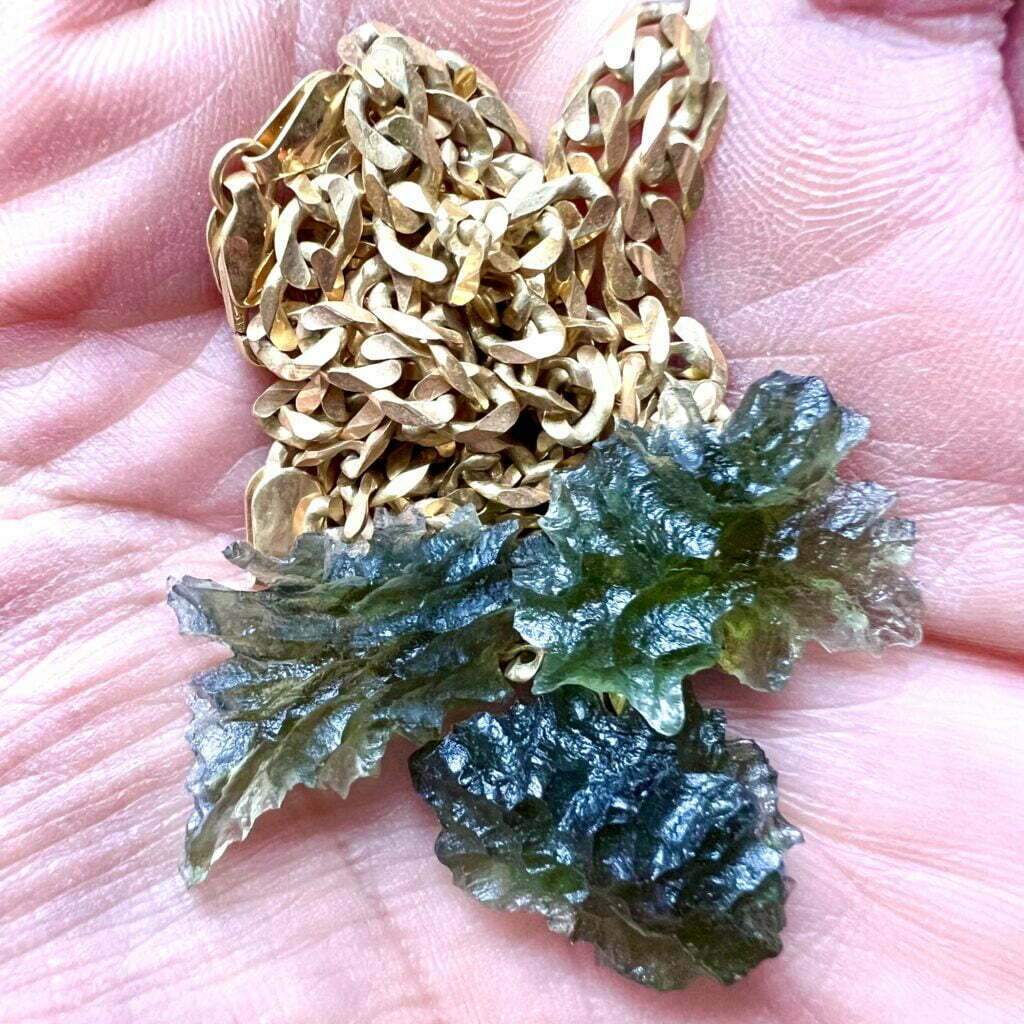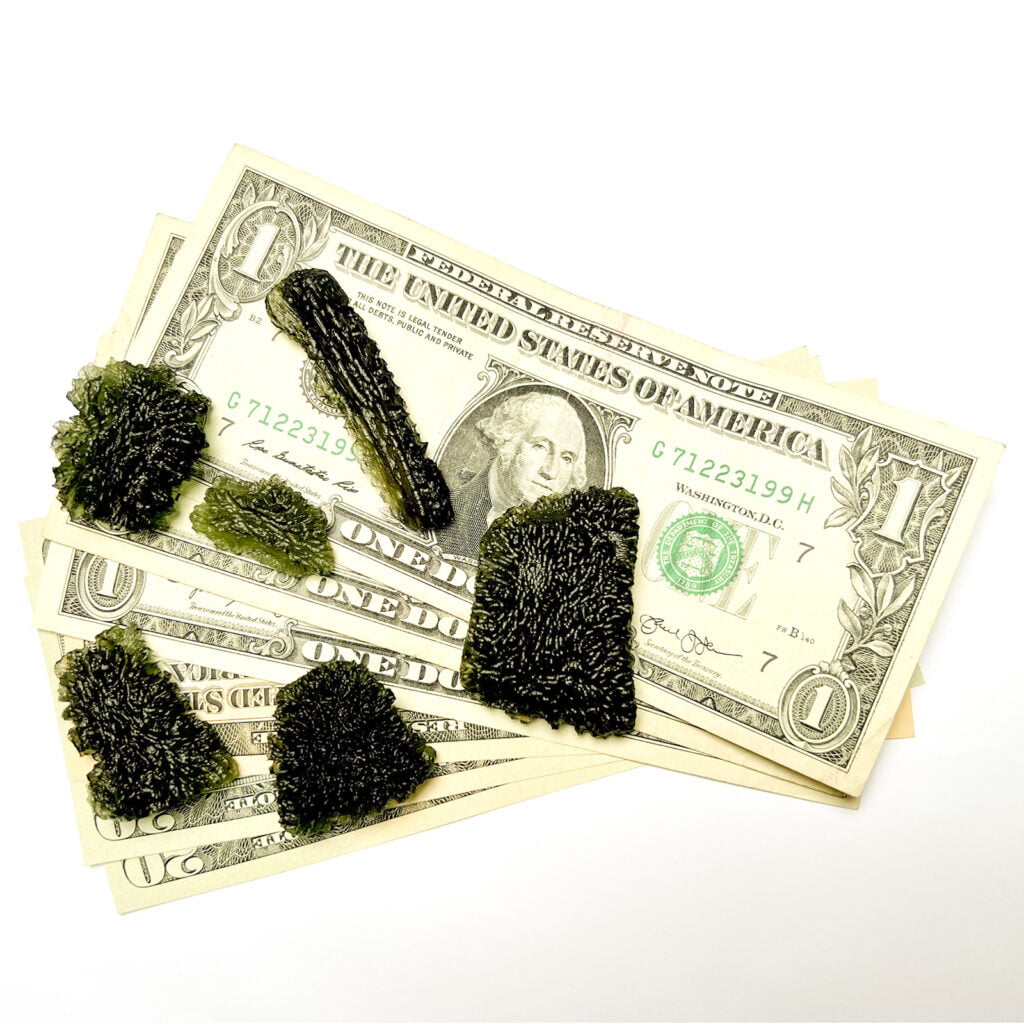
Everything you need to know to start building a meaningful, authentic, and valuable moldavite collection of these extraordinary tektites.
Conclusion and Topics
You can start with just a few small pieces and build gradually, at any budget. The golden rules are simple: always prioritize quality, avoid damaged pieces, and buy only from trusted sources to ensure authenticity. Over time, a great collection should cover all shape categories, multiple localities, a range of colors, and — if budget allows — a few rare or large specimens. Store everything properly, keep your collection secure, and enjoy the process. Read on to find out exactly how to do it right.
- Why People Fall in Love with Collecting
- Moldavite as an Investment and Store of Value
- Starting Small and Growing Gradually
- Quality Over Quantity — Always
- Authenticity Is Non-Negotiable
- What a Great Moldavite Collection Should Include
- Storing Your Moldavite Collection Properly
- Security — Protect What You’ve Built
- Buy Direct from the Source
Why People Fall in Love with Collecting
There is something deeply human about the urge to collect. Whether it’s stamps, coins, fossils, or fine art, collectors are drawn by the thrill of the hunt, the joy of ownership, and the quiet pride of curating something meaningful over time. Moldavites — those ancient, glass-green tektites formed roughly 15 million years ago by a meteorite impact in what is now Central Europe — offer all of this and more.
Every moldavite is a one-of-a-kind object with a shape, texture, and color produced by forces entirely beyond human control. No two moldavites are alike. Collectors are captivated by their otherworldly origin, their sculptural natural beauty, and the story embedded in each piece. Over time, a collection becomes more than an accumulation of objects — it becomes a personal archive of natural history.
For many, there is also a spiritual or energetic dimension to moldavite. It has long been associated with transformation and cosmic connection, making it meaningful far beyond its aesthetic appeal.
Moldavite as an Investment and Store of Value
Moldavite is a finite, non-renewable resource. The strewn field from which it is extracted — located primarily in Bohemia and Moravia in the Czech Republic — is limited, and high-quality specimens are becoming increasingly scarce. As mining progresses and global awareness of moldavite grows, quality pieces have shown a clear long-term appreciation in value.
Unlike many collectibles, high-quality moldavites — especially rare shapes, large specimens, and pieces from prized localities — have consistently held or increased their value over time. For a collector, this means that assembling a thoughtful collection is not only a source of aesthetic pleasure but also a tangible way to preserve and grow wealth.
Scarcity drives value. Moldavite is found in only one place on Earth, and the supply is finite. Demand from collectors, jewelers, and spiritual communities worldwide continues to grow. A well-curated collection, especially one focused on quality and rare forms, is both a passion project and a sound asset.
Starting Small and Growing Gradually
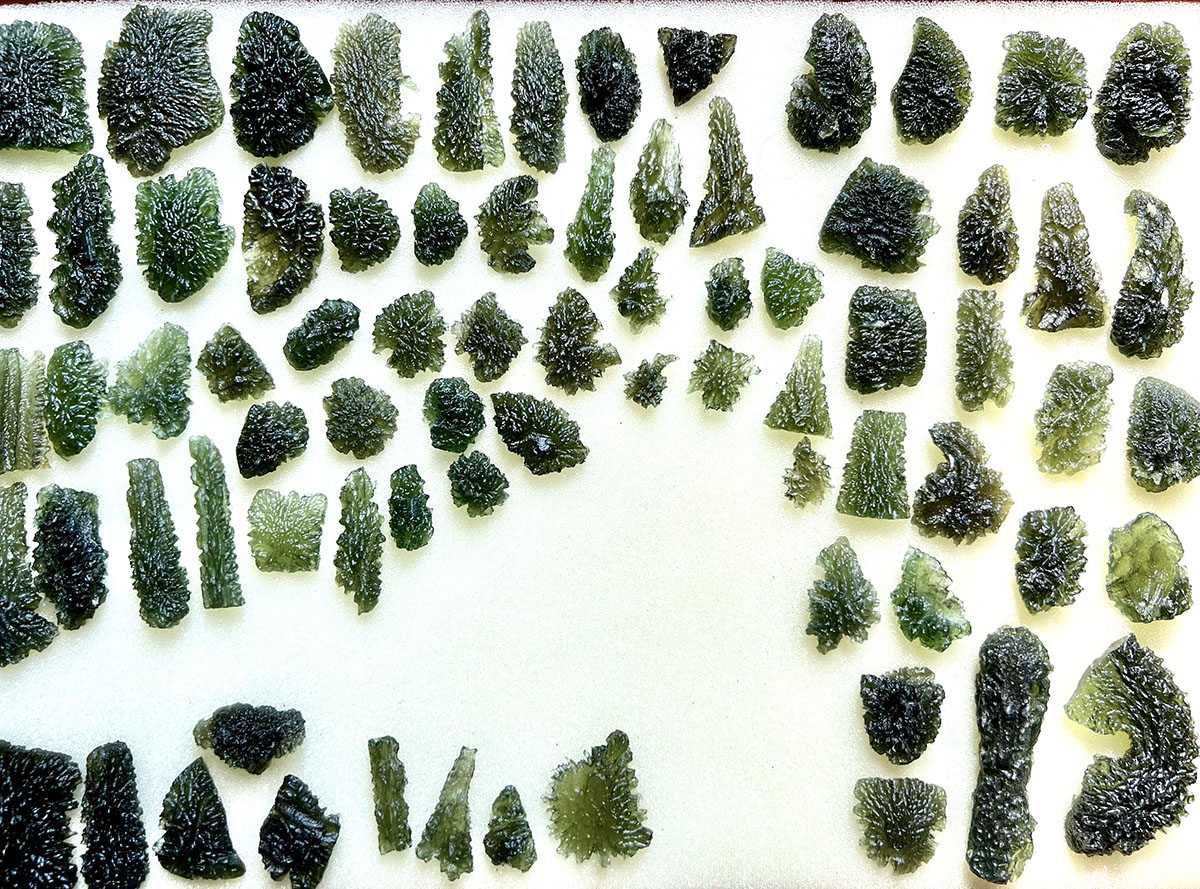 One of the most liberating things about building a moldavite collection is that you can start at virtually any budget level. A beginner can begin with a handful of small, high-quality pieces and expand the collection systematically over months or years. The key is intentionality — buying thoughtfully rather than impulsively.
With a modest budget, your collection will naturally consist of smaller pieces, and rare or exceptionally large moldavites will be out of reach for now. That’s perfectly fine. Small moldavites can be just as beautiful and interesting as large ones, and a focused, coherent collection of quality small pieces will always be more impressive than a jumble of mediocre larger ones.
As your budget grows, so can your ambitions — adding larger specimens, rarer shapes, or pieces from sought-after localities.
💡 Beginner’s mindset: Think of your first purchases as the foundation, not the collection itself. Set a theme or goal — “one of each shape category” or “pieces from three different localities” — and build toward it deliberately.
Quality Over Quantity — Always
If there is one principle that experienced moldavite collectors agree on, it’s this: always prioritize quality. When starting out, it can be tempting to buy more pieces at lower prices. Resist this temptation. A smaller collection of fine, undamaged, textured pieces will bring far more satisfaction — and hold far more value — than a larger collection of mediocre ones.
What to look for:
- Pronounced, distinctive surface texture — the characteristic rippling, pitting, and sculpting formed during the moldavite’s flight through the atmosphere and subsequently preserved in sediments for millions of years is a hallmark of quality.
- An interesting, well-defined natural shape.
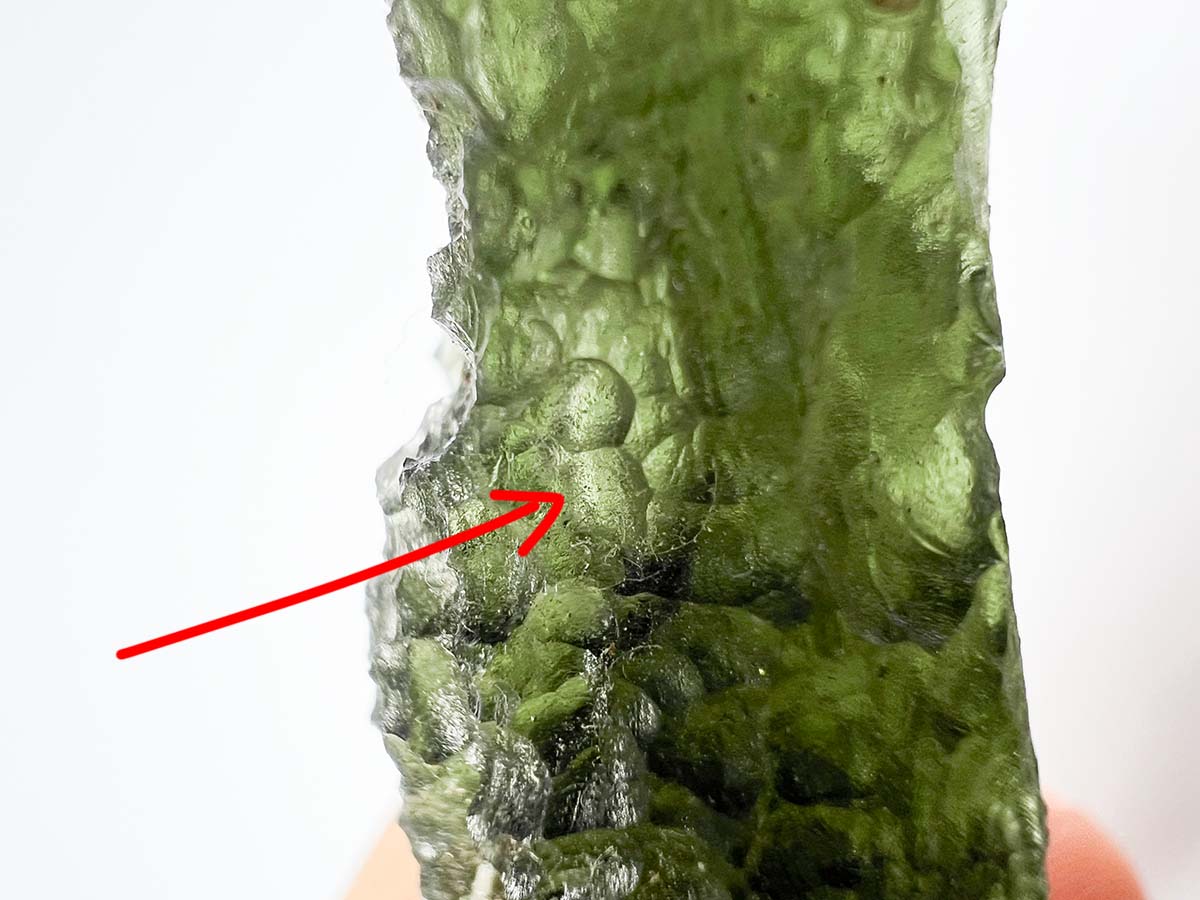
- No chips, cracks, or damage — these significantly diminish both beauty and value.
Avoid damaged moldavites. Chips and cracks are a serious issue for collectors — they reduce value and cannot be undone. Before purchasing, always inspect a piece carefully. Learn how to identify damaged moldavites: How to Recognize a Chipped or Damaged Moldavite →
Authenticity Is Non-Negotiable
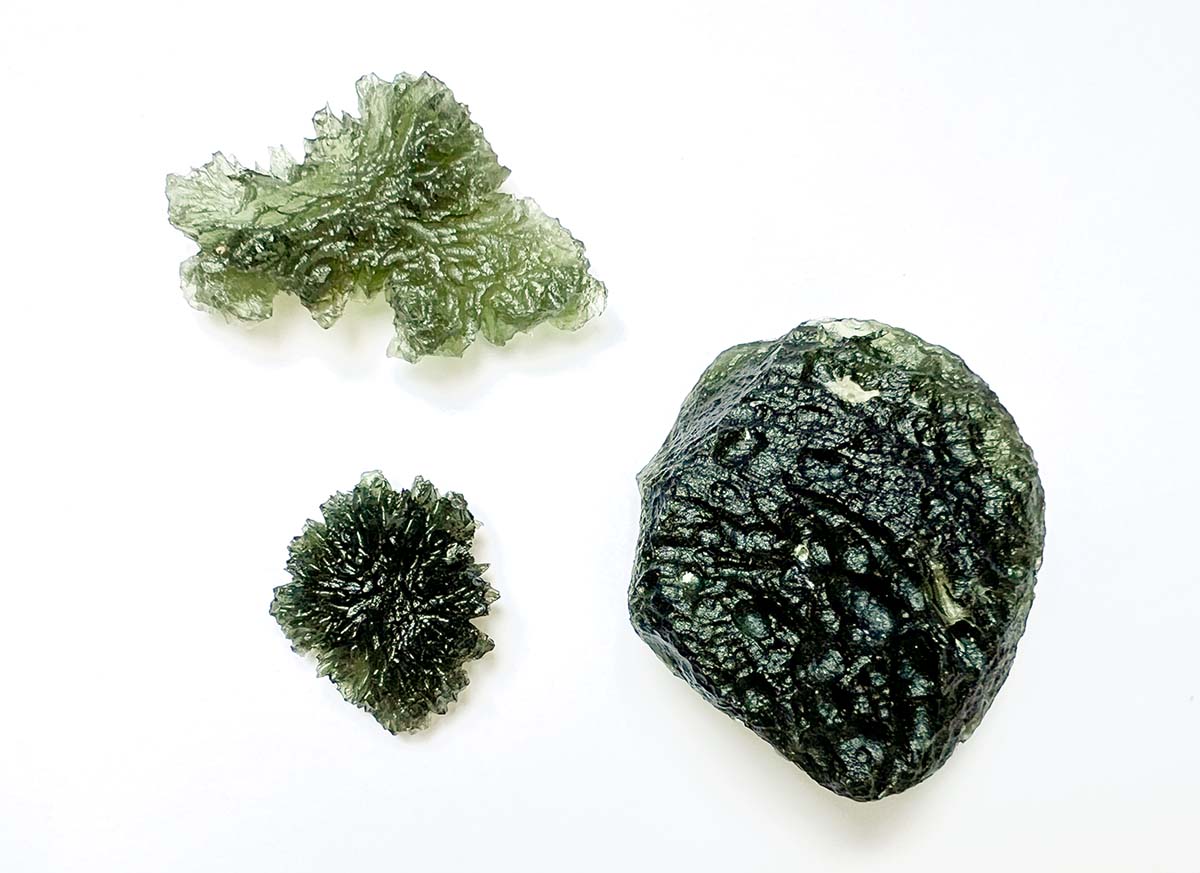
The moldavite market, particularly online, is unfortunately flooded with fakes. Counterfeit glass pieces — often produced in China — are sold as genuine moldavite at alarming scale. Some imitations are surprisingly convincing to the untrained eye. This makes it absolutely essential to buy only from trustworthy, verified sources.
A fake moldavite has zero collector value. It is simply colored glass. No matter how good a deal seems, an inauthentic piece is always a complete loss. This is one area where cutting corners is never worth it.
Only buy from sources you trust. Look for sellers who mine or source directly, who offer certificates or provenance documentation, and who have a verifiable track record. Established dealers — especially those operating directly from the Czech Republic — are your safest bet.
If you’d like to learn how to tell a real moldavite from a fake, check out this book →
What a Great Moldavite Collection Should Include
A well-rounded moldavite collection tells the full story of what this remarkable material can be. Over time, aim to include representation across shapes, localities, colors, and rarity levels.
Primary Shapes — The Rarest of All
Primary moldavites formed as discrete aerodynamic shapes during the original impact event. They are the rarest category and the crown jewels of any collection. The five recognized primary shapes are:
- Drop – Teardrop form
- Ellipsoid – Oval body
- Disk – Flat, round
- Sphere – Rounded ball
- Dumbbell – Two lobes (rare and expensive)
Aim to acquire at least one representative of each primary shape. Even a small example of each is enough to make your collection encyclopedic in its scope. Learn more about primary moldavite shapes →
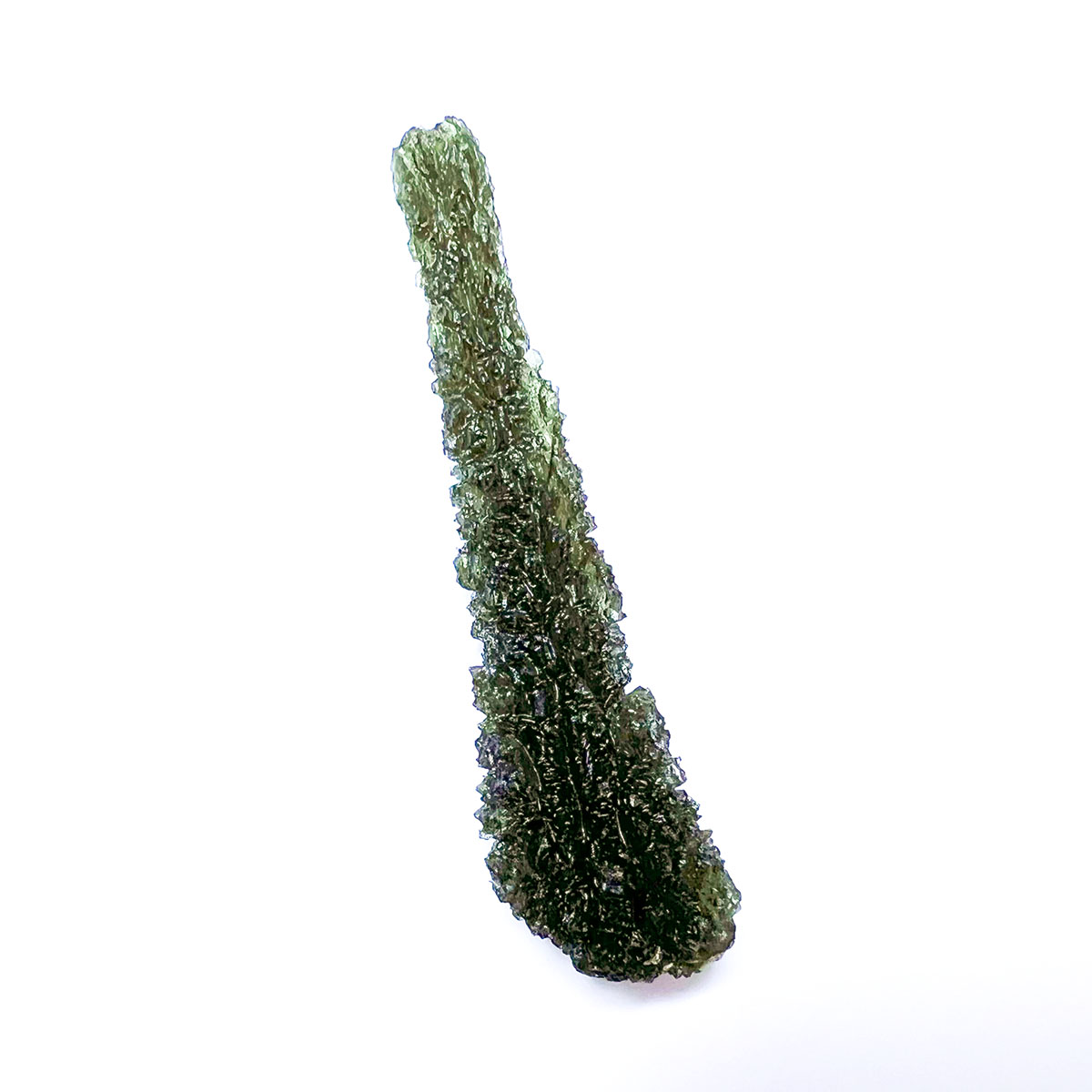
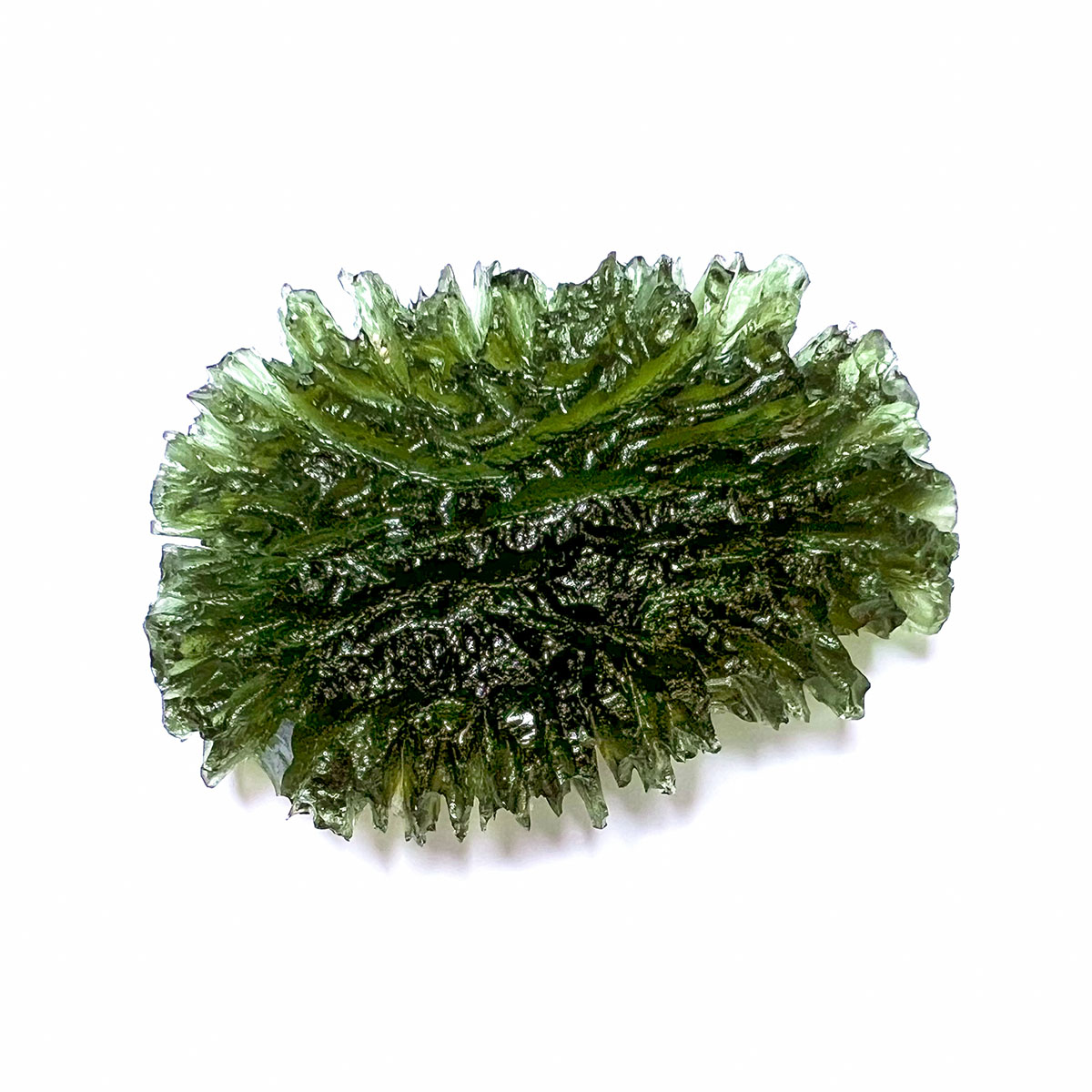
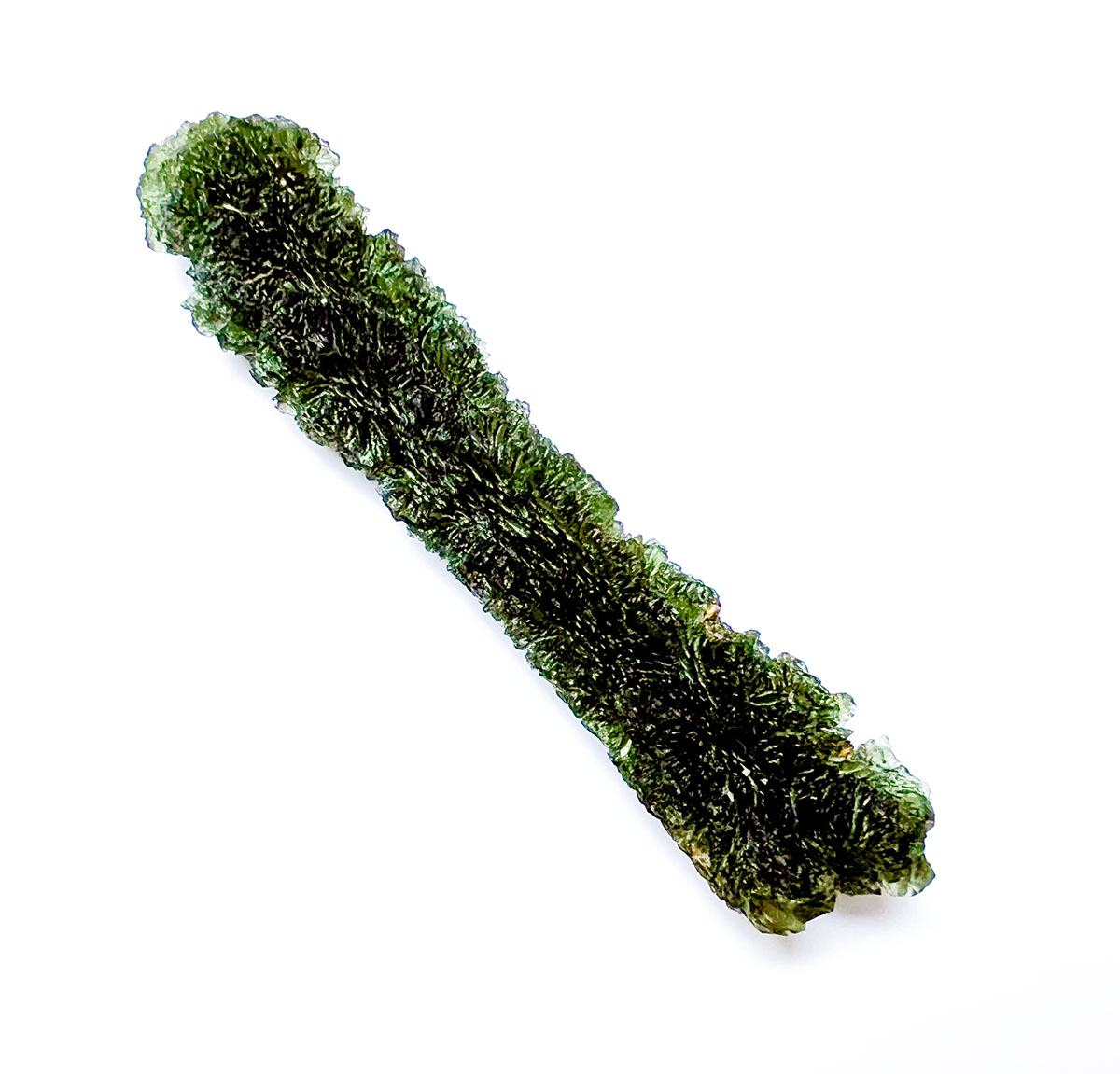
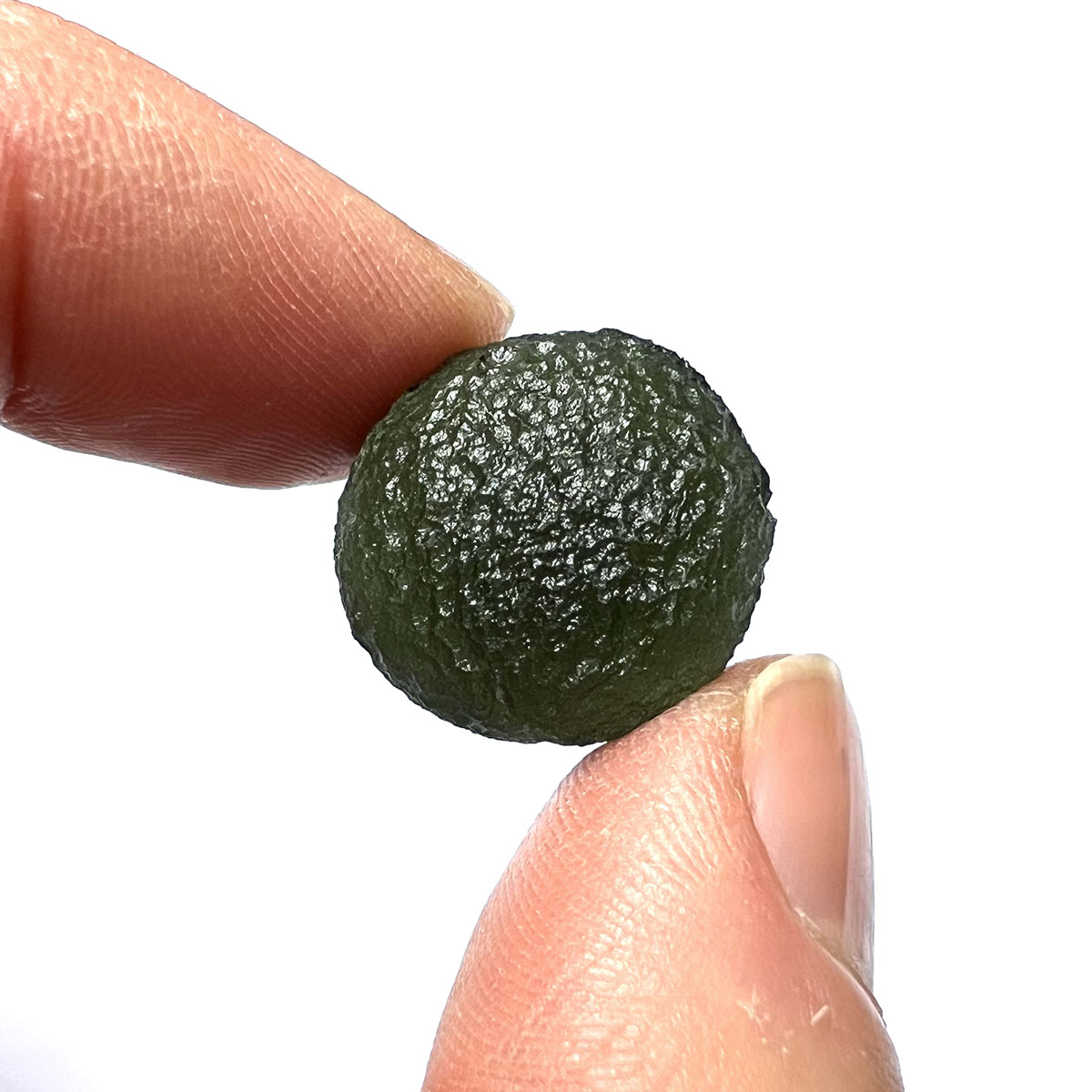
Fragments of Primary Shapes
These are pieces that clearly broke from a primary-shaped moldavite — you can often see the tell-tale smooth, broken face alongside the textured natural surface. They are rarer than common fragments and still highly collectible. Read about partial primary shapes of moldavites→
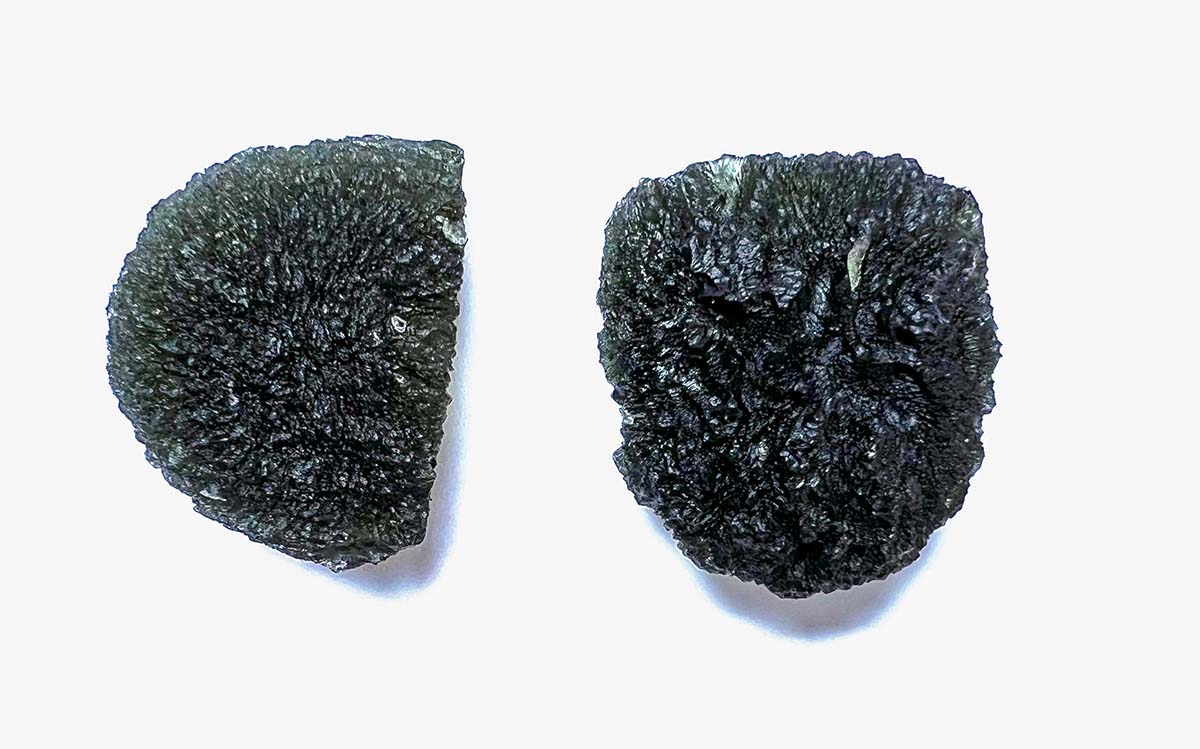
Fragments — The Foundation of Any Collection
Fragments are the most common moldavite form — irregular pieces broken during their journey or excavation. While common, fine examples with strong texture and good color are still very desirable and form the backbone of most collections. Read more about moldavite fragment shapes →
Moldavites from Different Localities
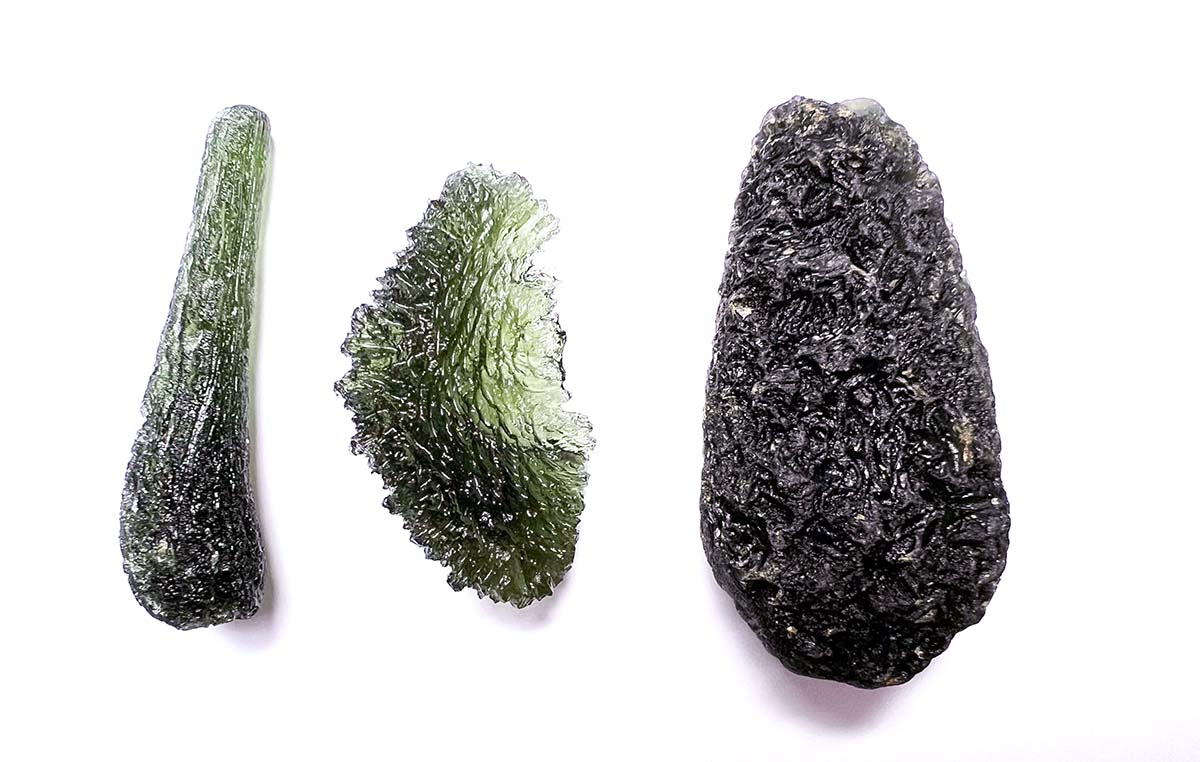 Moldavites from different parts of the strewn field tend to have their own visual signatures — differences in color, texture, and surface character that experienced collectors can often identify at a glance. Building a geographically diverse collection adds an educational dimension and makes for fascinating comparison.
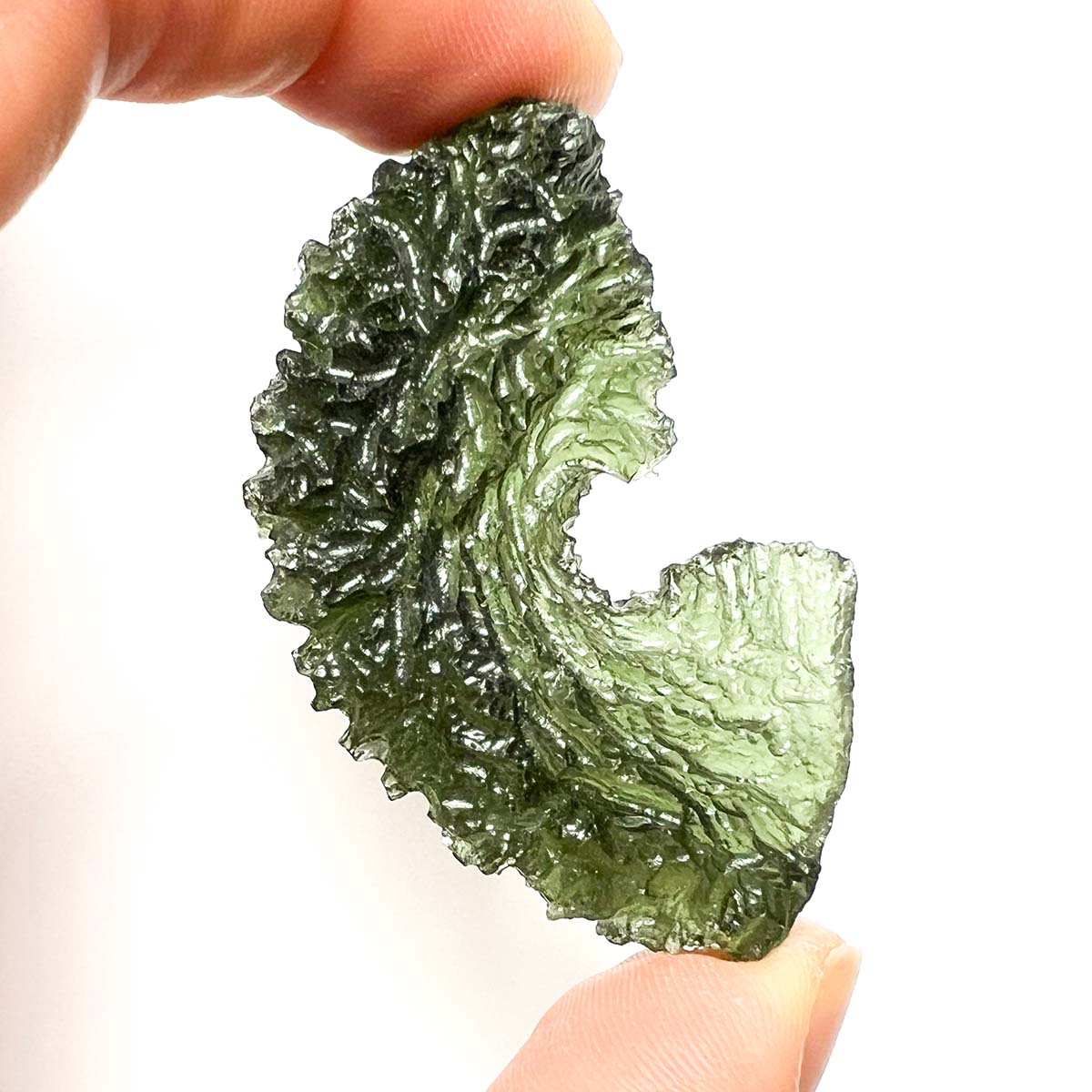
One locality that deserves special mention is Besednice, a village that has produced some of the most dramatically textured and visually spectacular moldavites ever found — often called “hedgehogs” for their spiky, deeply sculpted surfaces. These are highly prized and a must for any serious collector. Read more about Besednice “hedgehog” moldavites →
A Range of Colors
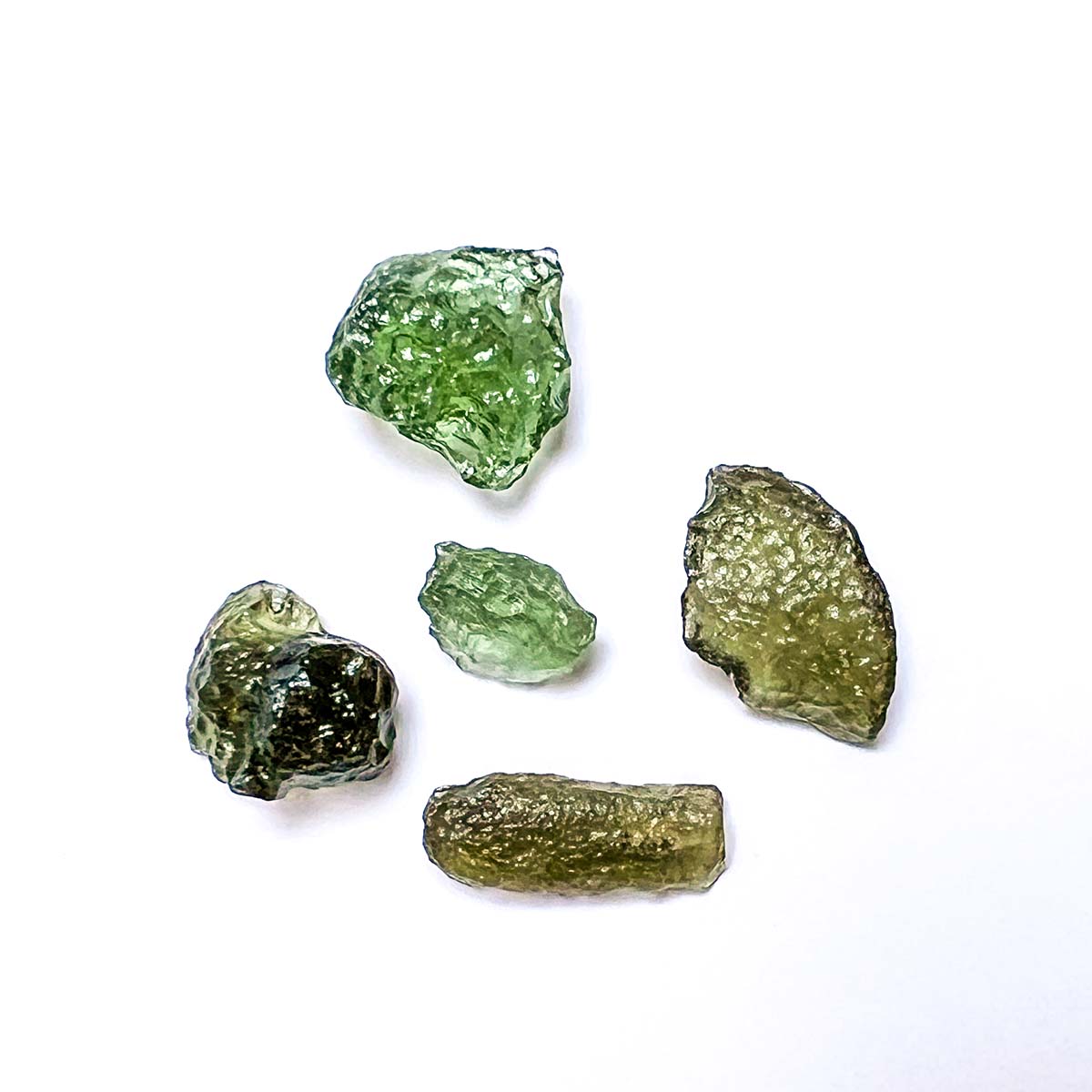
Though moldavite is best known for its characteristic bottle-green color, the range of shades found in nature is surprisingly wide — from pale, almost yellowish greens to deep forest tones, and including the very rare brownish or bi-color specimens. Including a variety of colors in your collection showcases this natural diversity. Read about moldavite colors →
Rare and Unusual Forms
Every collector eventually develops a fascination with the exceptional — pieces that stand apart from the ordinary. These might include:
- Unusually rare primary shapes
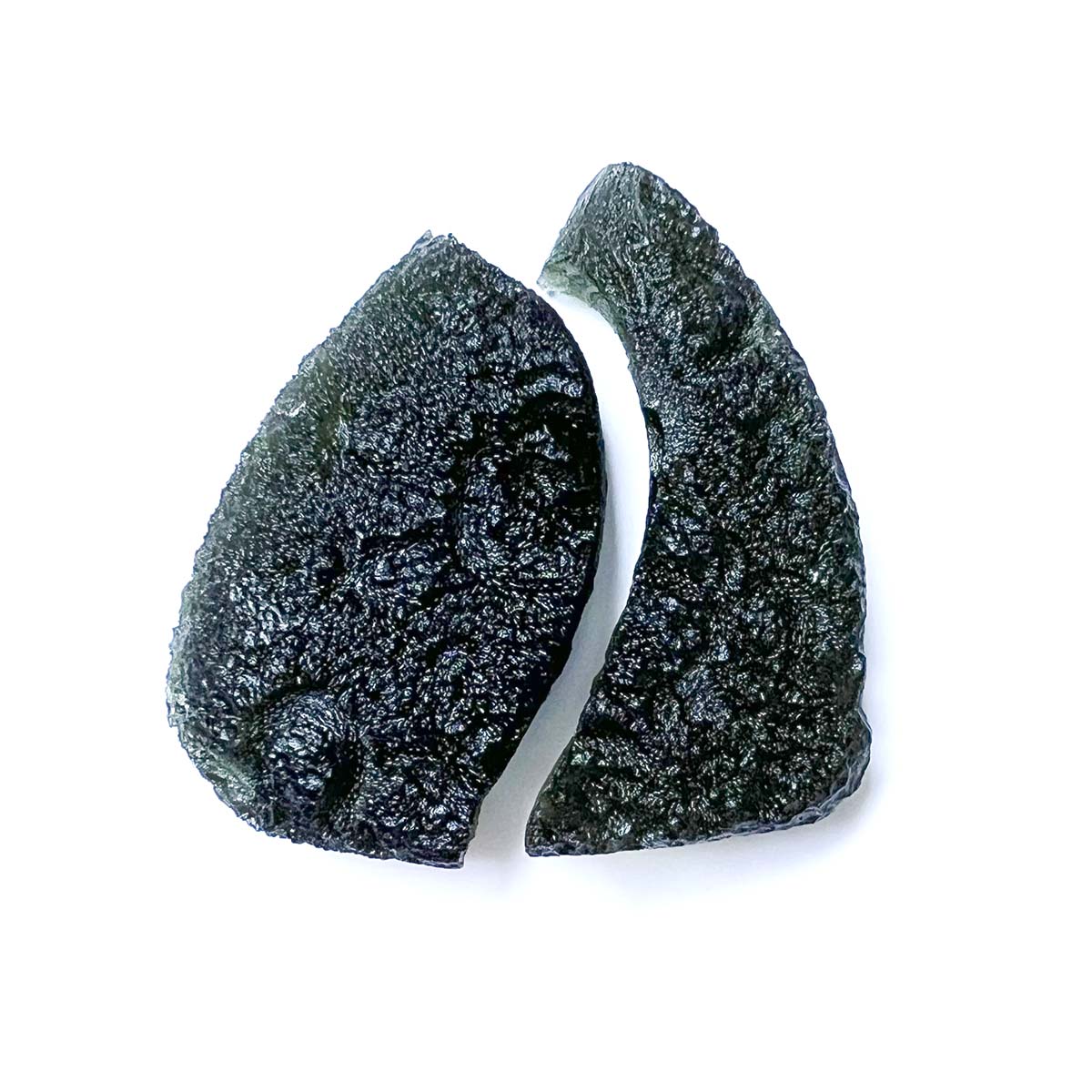
- Naturally split moldavites, where the piece cracked under natural thermal stress rather than external damage
- Bi-color moldavites, showing two distinct color zones in a single piece
- Exceptionally large specimens
- Pieces with extraordinary sculptural texture
- Uncommon shapes
- Angel chime modavites
- Moldavites with a deformation
Rare forms command premium prices, but even a single exceptional specimen can become the centerpiece of an entire collection.
Large Specimens — If Budget Allows
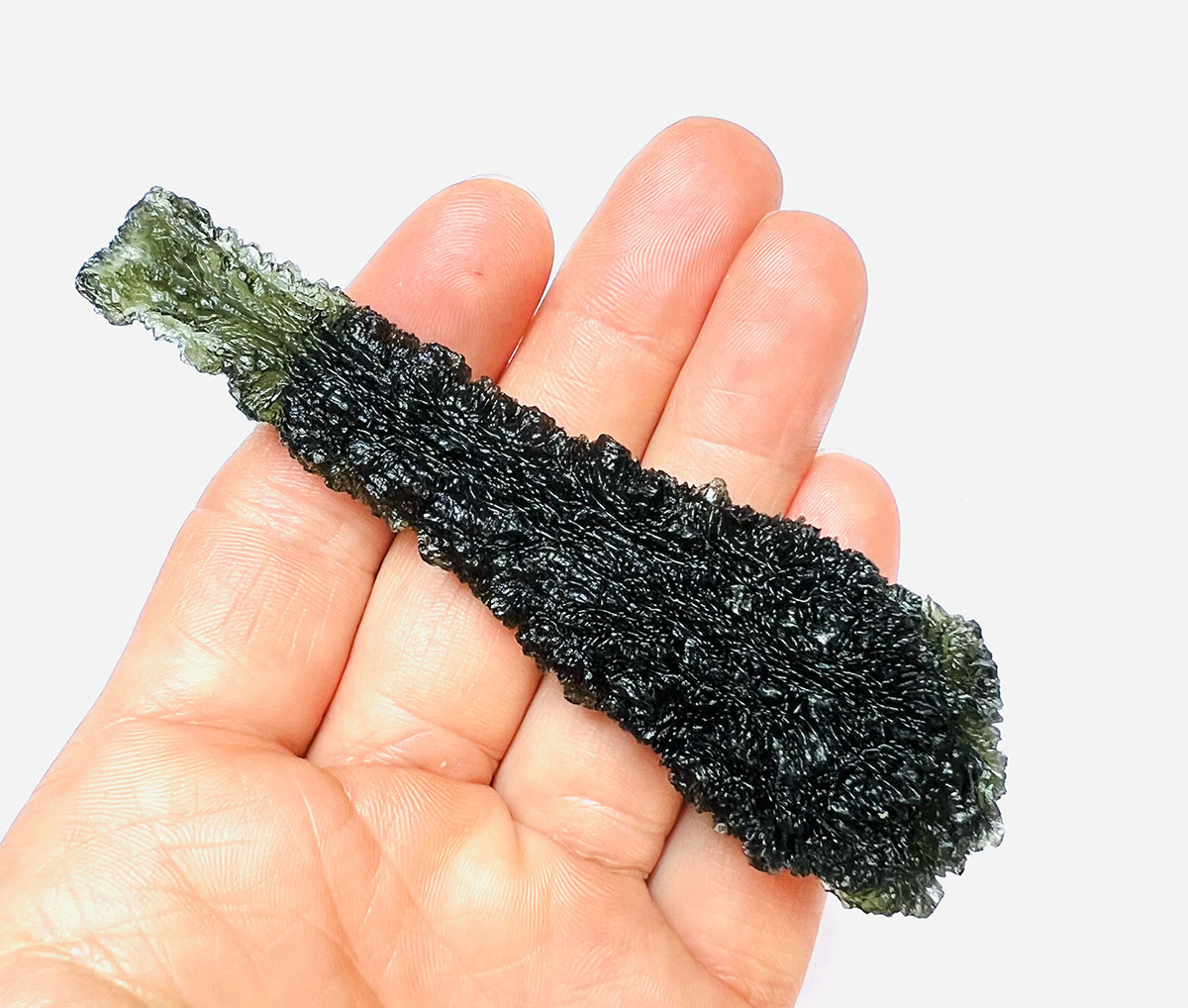
Size matters in the moldavite world. Large moldavites (generally above 10–20 grams) are exponentially rarer than smaller ones and command significant premiums. If your budget allows, including even one or two substantial large pieces will dramatically elevate the prestige and value of your collection. For serious collectors with larger resources, acquiring large, high-quality specimens should be a priority.
Storing Your Moldavite Collection Properly
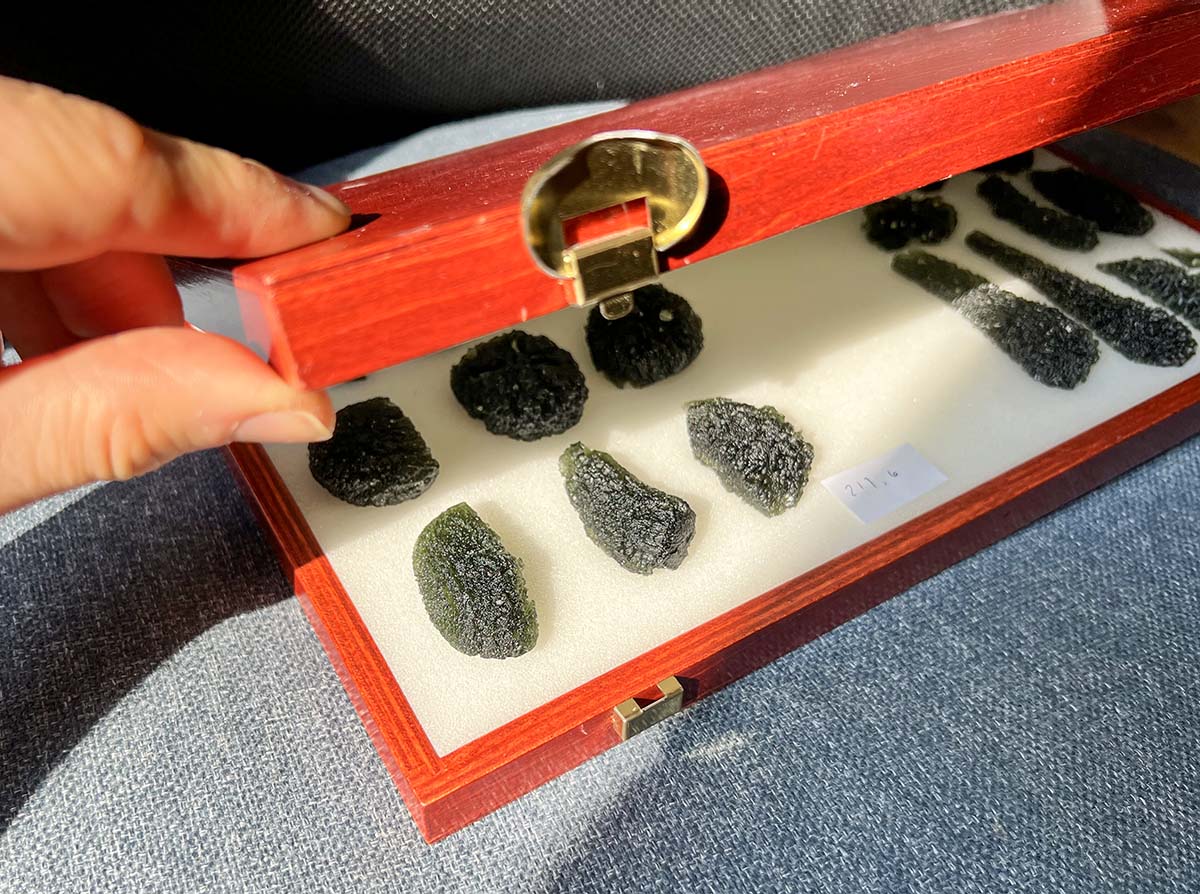 Proper storage is not an afterthought — it is an essential part of caring for your collection. Moldavites may be hard glass, but they can chip, scratch, and damage each other if stored carelessly.
- Use specialized display cases. The ideal solution is a purpose-built wooden case lined with soft foam — these allow each piece to sit securely in its own recess, protected and beautifully displayed at the same time.
- Never let moldavites touch each other. Each piece should have its own dedicated space. Contact between pieces is the primary cause of accidental chipping and surface damage — irreversible harm that destroys value.
- Never store them “loose.” Keeping moldavites rattling around freely in a box or bag — even briefly — is the single worst thing you can do to your collection. Even a short journey in a loose container can result in chipped edges and scratched surfaces.
For detailed guidance on the best storage solutions and materials, see: How to Store Moldavites →
Security — Protect What You’ve Built
A valuable moldavite collection is, by definition, a concentrated store of wealth in a small and easily transported form. This makes security a genuine concern that should not be overlooked.
A valuable collection should be stored securely. The ideal solution is a safety deposit box at a bank — an extremely safe, climate-controlled environment. If you prefer to keep your collection at home, a quality, bolted-down safe is a reasonable alternative.
Beyond physical storage, practice discretion. Don’t broadcast the existence or extent of your collection widely, especially online. The more people who know you own a significant collection of valuable natural objects, the greater the risk of unwanted attention. Share your passion with trusted fellow collectors, but exercise judgment about how publicly you display or discuss what you own.
Buy Moldavites Direct from the Source
We are active moldavite miners operating directly in the Czech Republic. Every piece we offer is personally excavated and verified by our team — you are buying directly from the people who pull these remarkable objects from the earth.
That means zero risk of counterfeits, direct provenance, and the assurance that what you receive is exactly what it appears to be: a genuine, natural moldavite of documented origin.
When building a collection, there is no safer, more trustworthy starting point than buying directly from a miner.
Buy moldavite directly from miner:
- Certified Moldavites
- Investment Moldavites
- Besednice Moldavites
- Rare forms of moldavites
- Moldavite Jewelry (pendants, rings)