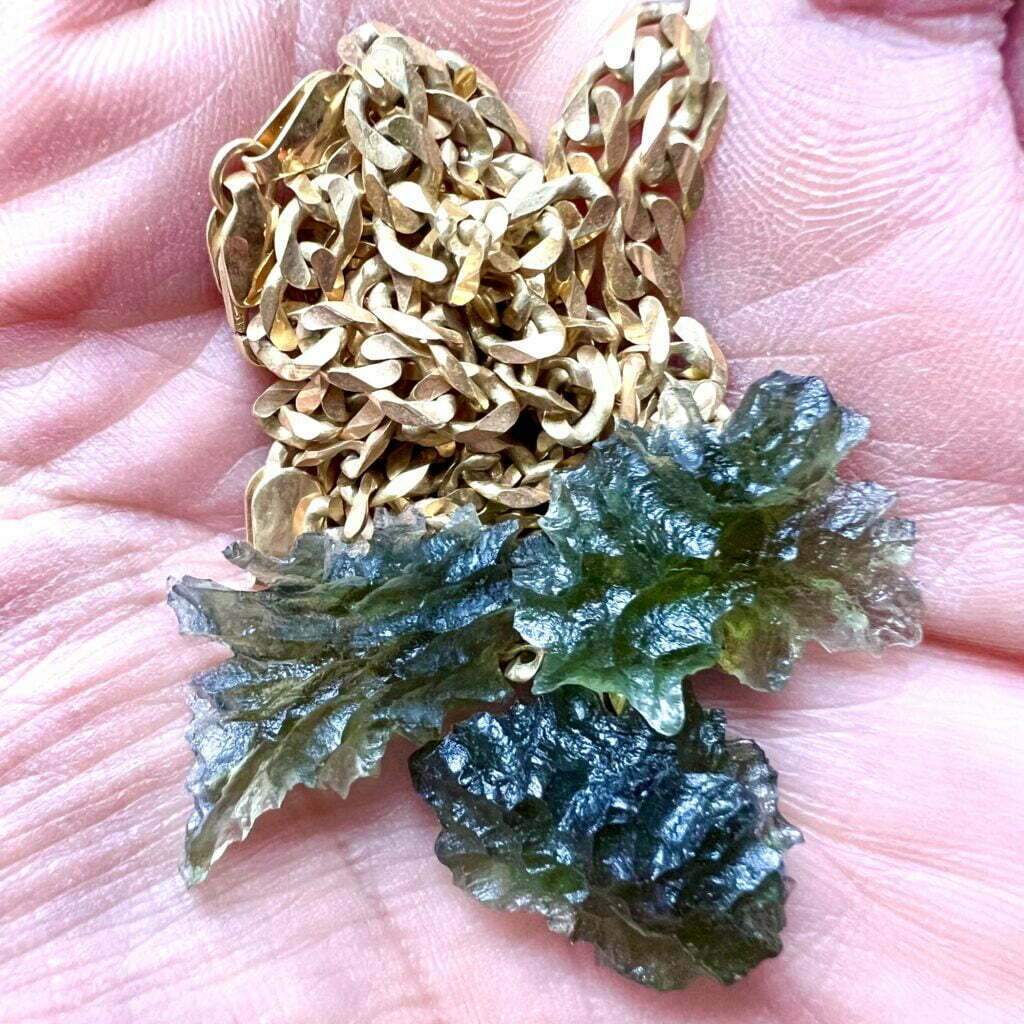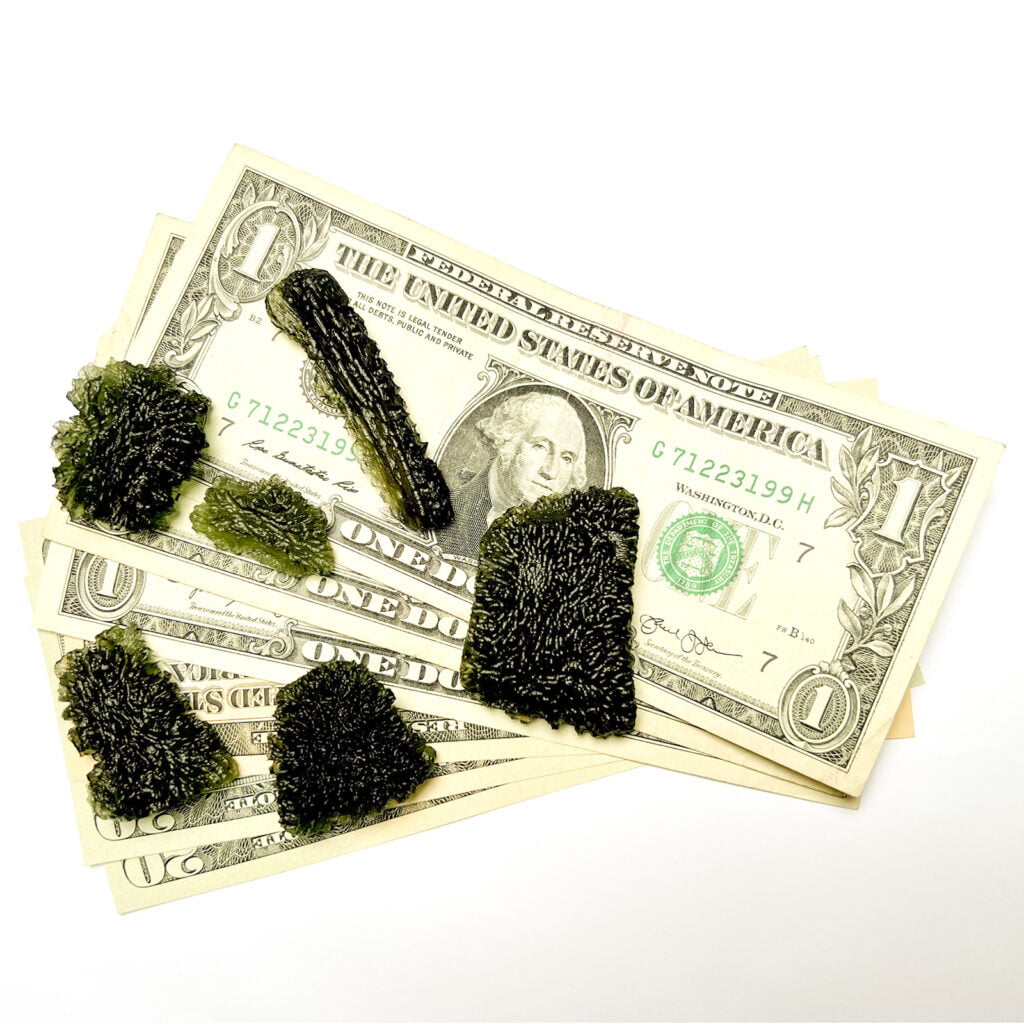
Moldavite is one of the most commonly faked gemstones in the world – but you don’t need to be a gemologist to spot the difference between real vs fake moldavite. With the right knowledge, anyone can learn to recognize a genuine stone and avoid imitations. In this guide, you’ll discover exactly how to tell real moldavite from fake.
This article is divided into several parts, you will learn
- What to look out for in general
- Common signs of fake moldavite
- How to identify genuine faceted (cut, polished) moldavite
- How to distinguish between fake and genuine moldavite beads
- How to identify genuine raw moldavite
- How to identify authentic moldavite from Besednice
- Gemological test of authenticity of moldavites
- Detailed information and instructions
- FAQ – Practical tips on how to identify genuine and fake moldavite
- Free Moldavite Authentication Service
- Where to buy real authentic moldavite
Moldavite Authenticity Verification – Free Service
Would you like to verify the authenticity of your moldavite?
Or do you need to find out if the moldavite you want to buy is genuine?
Upload photos (or a link to the moldavite online), and an expert will verify the stone remotely.
Moldavites are among the most prized gemstones in the world, but their rising value has made them a prime target for forgery – with up to 90% of moldavites currently on the market estimated to be fake. Counterfeits range from simple glass rhinestones to melted-and-reformed moldavite fragments, and some even come with fraudulent certificates of authenticity. Knowing how to tell a genuine moldavite from an imitation has never been more important.
Information on how to identify a fake moldavite and how to identify an authentic moldavite is taken from the book How to identify genuine moldavites and moldavite fakes ↗.

What to watch out for in general
When buying moldavite, it’s a good idea to look for a few key characteristics that will help you avoid the disappointment of purchasing a fake moldavite.
1. Seller’s reputation
- When buying a moldavite – especially online – always start by checking the seller’s reputation. Seller’s track record and customer reviews are your first and most important line of defence.
- Unfortunately, you can’t always rely on reviews. I’ve found sellers with good reviews who were still selling fake moldavites (possibly unknowingly). These were usually sellers who also offered other types of gemstones. The positive reviews were most likely from those other sales.
- Avoid some platforms like Temu, Alibaba, AliExpress, etc. – the majority of counterfeits originate from sellers based in China, India, and Thailand.
- Be careful on eBay, Etsy, and other platforms as well. The situation is generally better there, but there are still a large number of fake moldavites – especially cut moldavites.
2. Certification – Moldavites with a certificate of authenticity
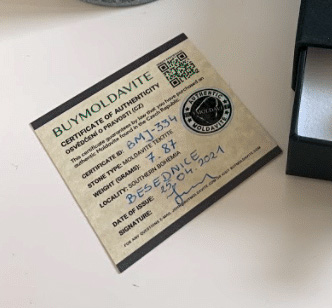
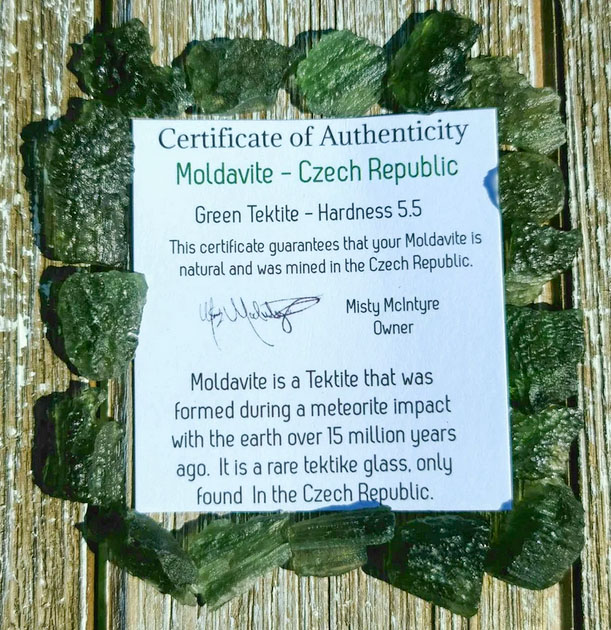
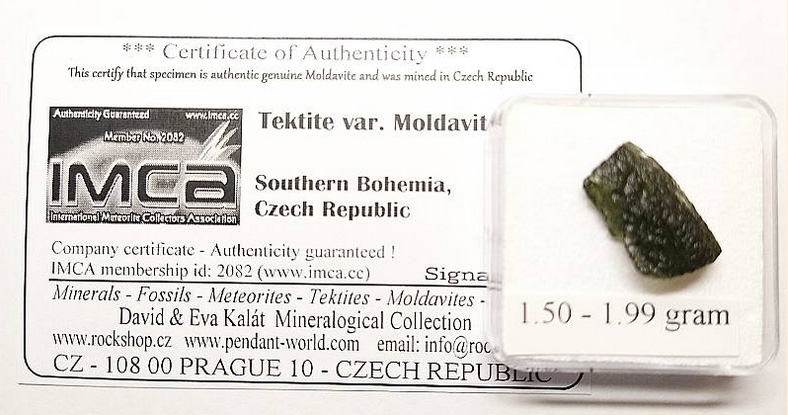
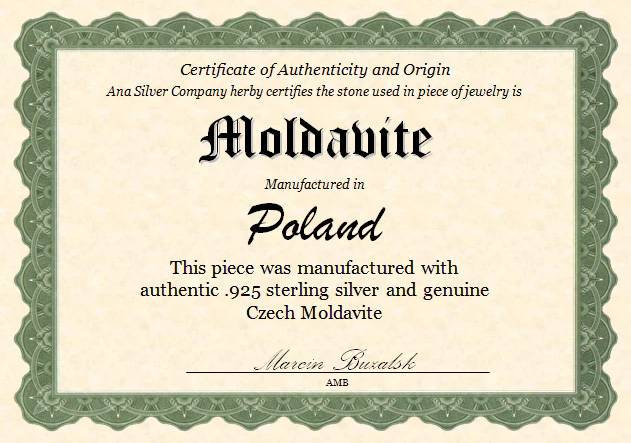
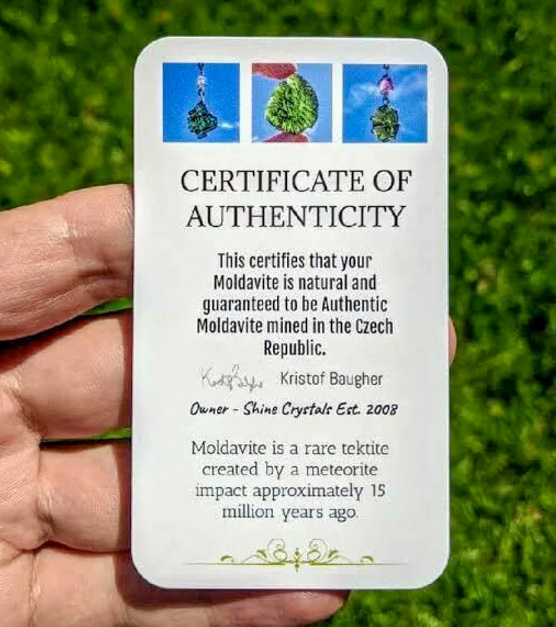
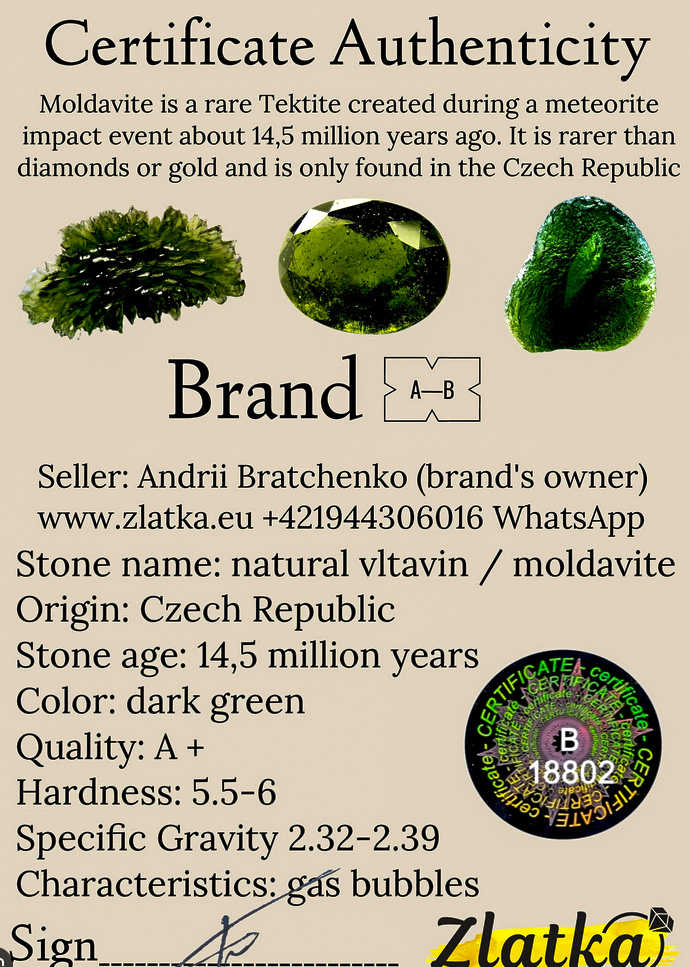
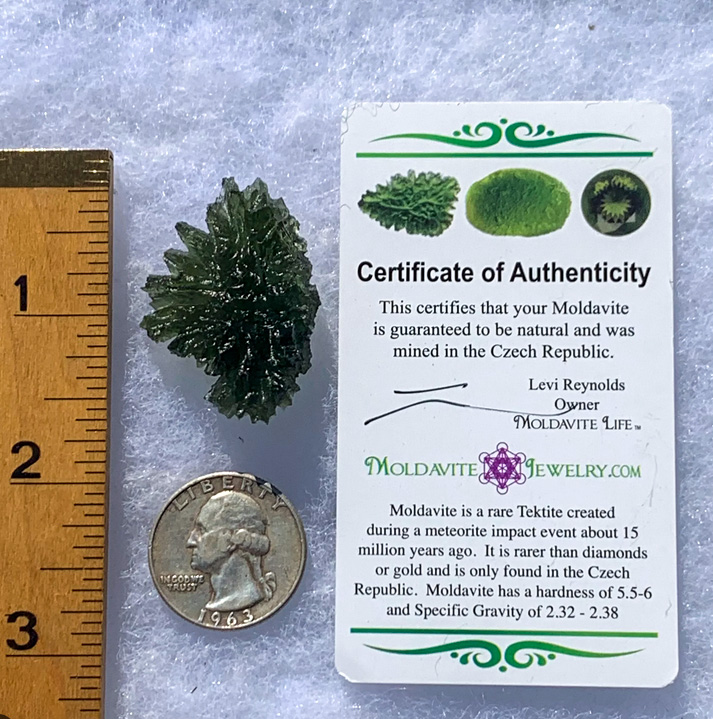
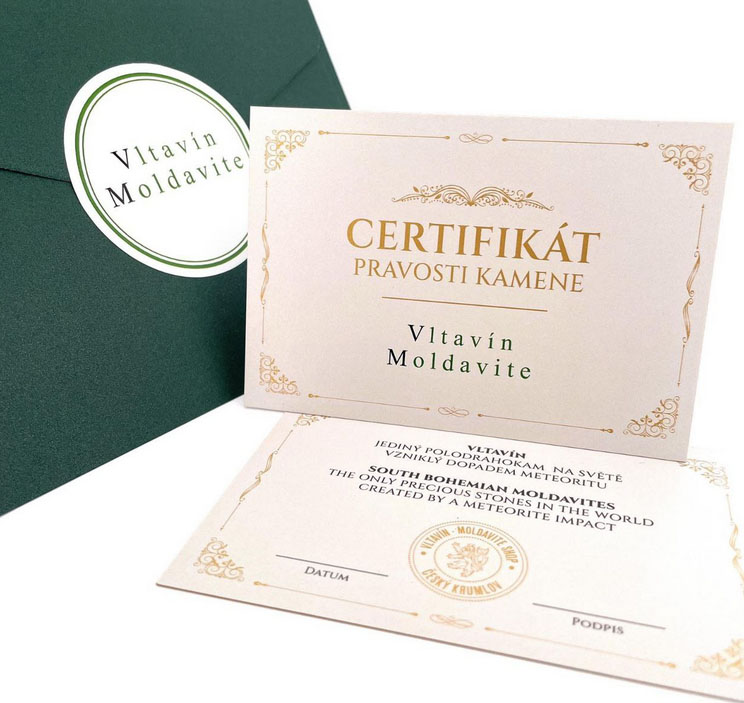
Very often, the seller provides only a generic certificate of authenticity, which, however, has no connection whatsoever to the moldavite sold.
So make sure to check whether the moldavite comes with a general certificate or a certificate specific to that particular moldavite – the certificate must include details about the moldavite in question, ideally a photo as well, and it should be verifiable online.
Certificates that are legitimate are usually not free. Certification is typically only provided for larger pieces. It is therefore suspicious if you see a tiny stone that the seller claims is certified moldavite.
Some useless certificates

3. Origin of moldavite
It’s not a key indicator, but it can provide a clue.
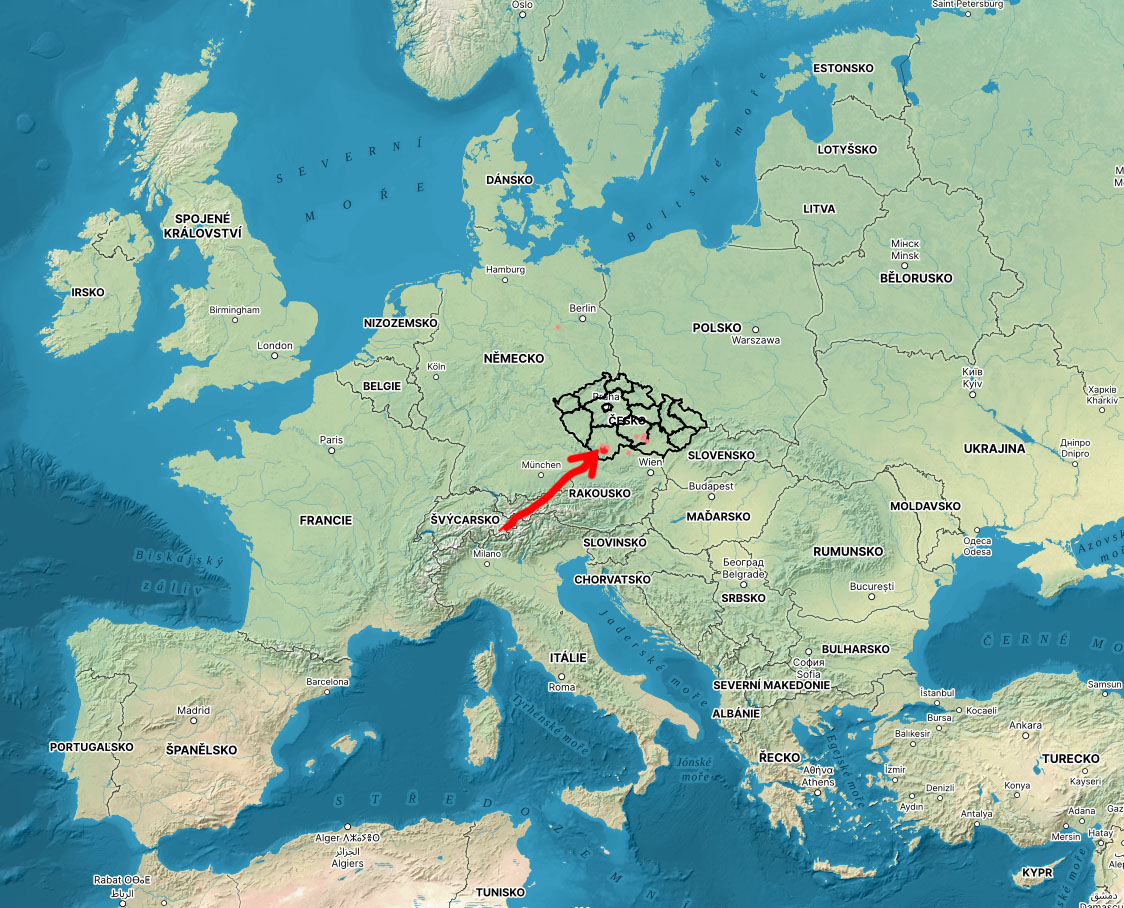 The vast majority of moldavites are found in the Czech Republic (Central Europe), and even there only in certain areas. Very rarely, moldavites can also be found in Germany, but you will practically never encounter them on the market. Here you can learn more about the origin of moldavites and where they are found ↗.
If a seller states a country other than the Czech Republic as the origin of a moldavite, it is incorrect. It is also quite common to list the origin simply as the Czech Republic, which is not ideal either. A good seller will always specify the exact locality – the find site where the particular moldavite was discovered.
Some sellers also fake the origin. This can be recognized from the surface of the moldavite (pieces from different localities usually have characteristic features), but you need to be experienced to identify that.
4. Buy moldavites wholesale
If you’re buying a large quantity of moldavites and don’t have a trusted seller, be sure to inspect each piece. This will help ensure that no fakes are mixed in with the genuine moldavites.
If you are looking for wholesale moldavites, you can find them here ↗.
Common signs of fake moldavite
- Too perfect shape or symmetry – for natural rough moldavites
- Very glossy / wet look (like melted glass)
- Real faceted moldavite is never optically “perfect”
- Bright neon green color
- Uniform bubbles (round and evenly spaced)
- Suspiciously low price
- Large pieces at cheap cost

How to Tell the Difference Between Genuine and Fake Faceted Moldavite
Fake faceted (cut or polished) moldavites are the easiest to produce. That is why this kind of moldavites is the most commonly counterfeited. If you want to buy a faceted moldavite, it is therefore essential to know how to identify a genuine one.
1. Color of the moldavite
Genuine moldavite is light green or even brownish in color. Most moldavites have a pleasantly muted color. You may come across polished stones that are bright green in color. These are usually glass imitations.
2. Examination of the internal structure of moldavite
The internal structure is the most important indicator.
The advantage is that you can see inside faceted moldavites quite clearly, so you can examine their internal structure in detail.
Checking moldavite authenticity from photos (online)
You will need sharp, high-quality photos – without them it won’t work.
You must be able to see inside the stone, not just the shiny surface.
If you have the moldavite physically
You will need a good light and magnifying glass. Or a camera with strong zoom (macro), and ideally a gemological microscope of course 😀
The internal structure of moldavites is not homogeneous (it is not clear like ordinary glass), but contains visible irregularities. Therefore, if a moldavite is clear or contains only one or two bubbles, it is likely a fake moldavite.
What’s inside a genuine moldavite

Bubbles
Most moldavites contain bubbles, ranging from tiny (0.01 mm) to several millimetres. They often appear in clusters, rows, or randomly, and are usually elongated or flattened.
If you do not find even a tiny bubble, you are probably inspecting a fake.
Schlierens
Schlieren (from German “Schliere”, meaning “streak”) are optical inhomogeneities in transparent material. Schlierens look like streaks or smudges. Sometimes called flow textures.
If you cannot distinguish any impurities in the modlavite, it is a fake.
Lechatelierite
Lechatelierites are tiny particles of pure silica glass, often fibre-like and snake-shaped, visible with a magnifying glass. The largest can reach several millimetres. They aren’t present in all moldavites but are common in South Bohemian ones, and fakes never contain them.
In the image above, it looks a bit like a bent worm or snake (in the upper part of the photo).
In short: “Worm-like” inclusions. Their presence strongly indicates authenticity, but their absence doesn’t necessarily mean the stone is fake.
3. Weight and size
Cut moldavites are usually of a smaller size. Their weight ranges within several grams (up to 15 cts).
If you have a faceted moldavite heavier than 2 grams, it might be a fake.
Conclusion – How to identify a genuine and fake faceted moldavite
When buying a faceted moldavite, the key is to look closely at what’s inside the stone. Genuine moldavites are typically light or muted green, weigh under 2 grams, and – most importantly – contain visible internal irregularities such as bubbles, schlierens, or worm-like lechatelierite inclusions. A stone that looks too clean, too bright, or too large should raise immediate suspicion. When in doubt, a magnifying glass and good lighting are your best tools for spotting a fake.
Guaranteed genuine, authentic faceted moldavites with a certificate can be found here ↗.
How to identify a genuine moldavite bead
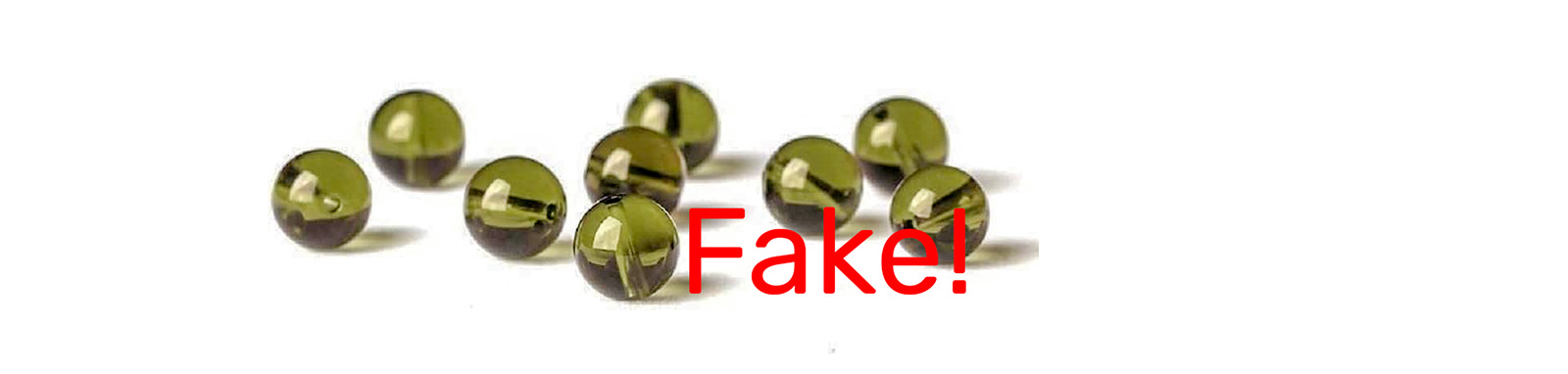
Moldavite beads are the most commonly faked form of moldavite. The vast majority of moldavite beads on the market are fake.
Genuine moldavite beads are very expensive. This is because they are quite difficult to produce (cutting and shaping). Many moldavites that a cutter starts working on never become finished beads – either the moldavite cracks or contains too many bubbles. Another reason is that beads can only be made from relatively large and thick moldavites. So you end up grinding a small bead from a large moldavite – and even that has to go well.
How to distinguish a genuine moldavite bead from a fake?
The basic approach is the same as with faceted moldavites – see the article “How to identify a genuine faceted moldavite.”
Also, look at the price. A single high-quality moldavite bead costs at least $100.
And similarly, consider the size. Moldavite beads larger than 10 mm are already rare and expensive.
When buying moldavite beads, be especially cautious.
Conclusion – how to distinguish fake and genuine moldavite beads
Real beads:
- Slight irregularities
- Matte or lightly textured surface
- Visible internal structure
Fake beads:
- Identical size and shape
- Bright green glass look
- Smooth and glossy
- Mass-produced appearance
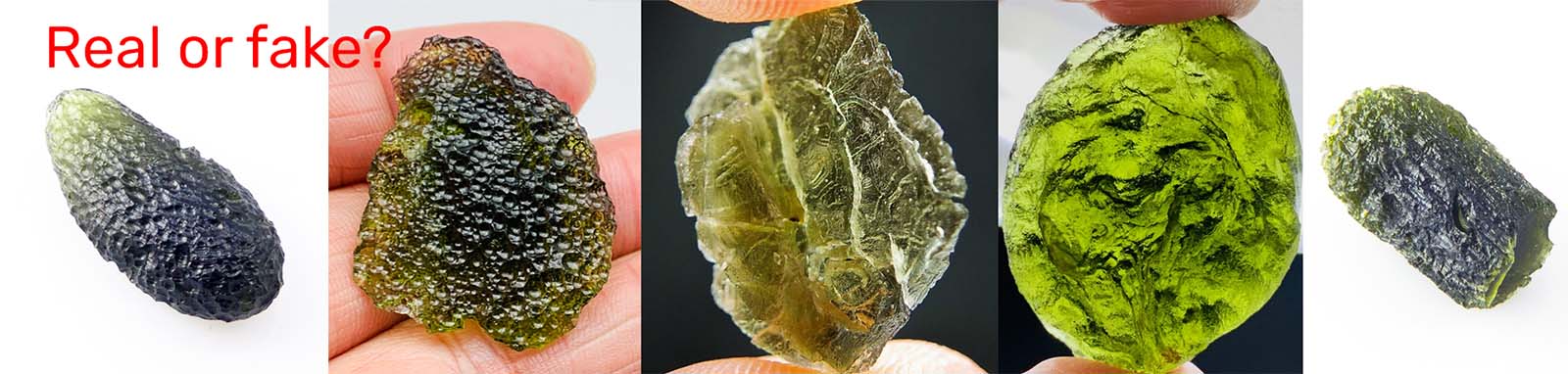
Real vs. Fake Moldavite – how to spot authentic raw moldavite
Raw, rough or just natural form of moldavite. Moldavites are harder to fake well due to their complex surface texture, but that same complexity can make spotting a counterfeit more challenging. The market ranges from obvious fakes to highly convincing imitations that can be difficult to distinguish from genuine stones – especially when working from photos alone.
1. Shape
Natural moldavites have completely irregular shapes. Perfect discs, ovals, or teardrops do not exist.
Each moldavite has a unique shape. There are no two moldavites with exactly the same form — they always differ at least slightly. Even if they look similar, they will have different dimensions, weight, and surface texture.
If a seller offers multiple moldavites with the same appearance, they are definitely fake.
2. Moldavite surface – texture
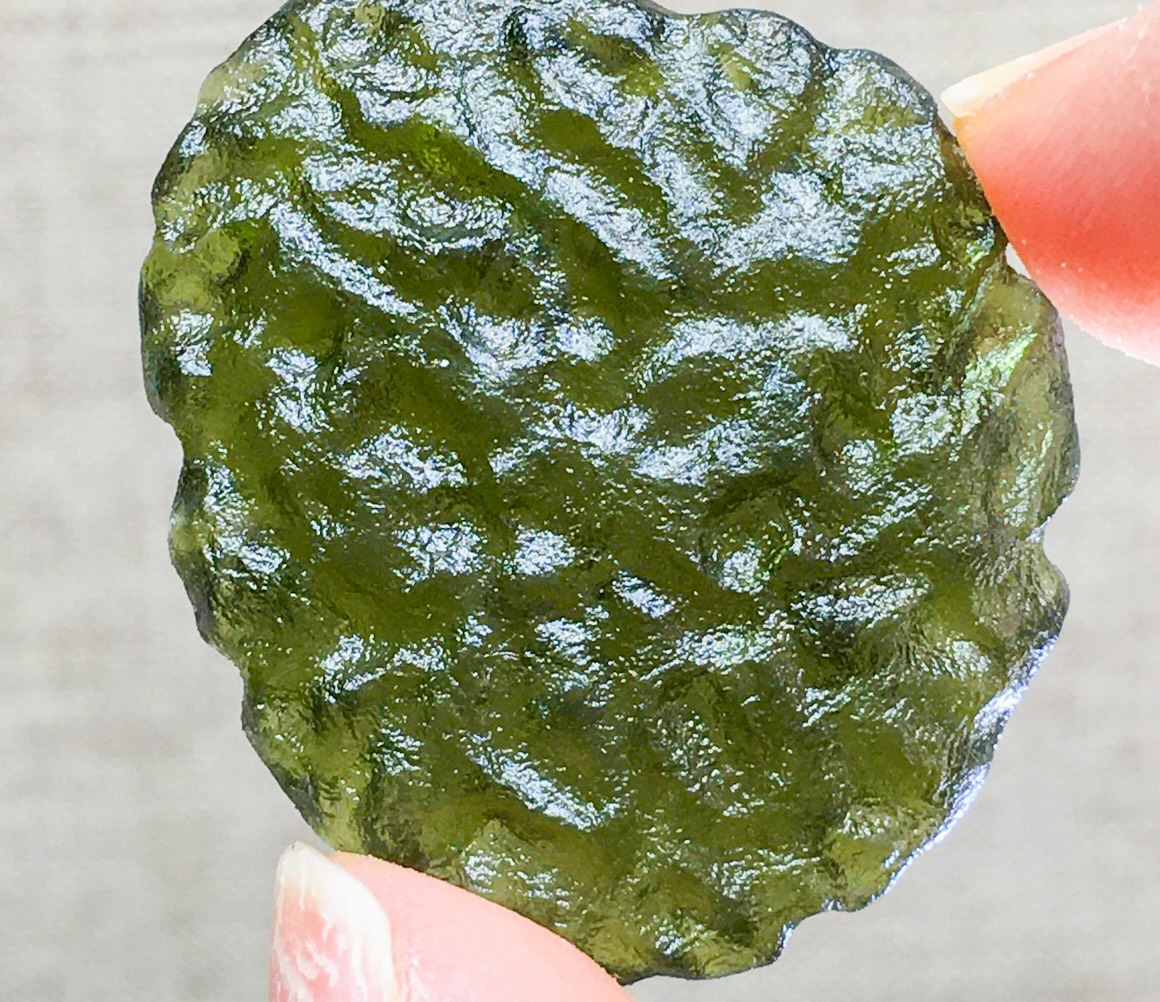
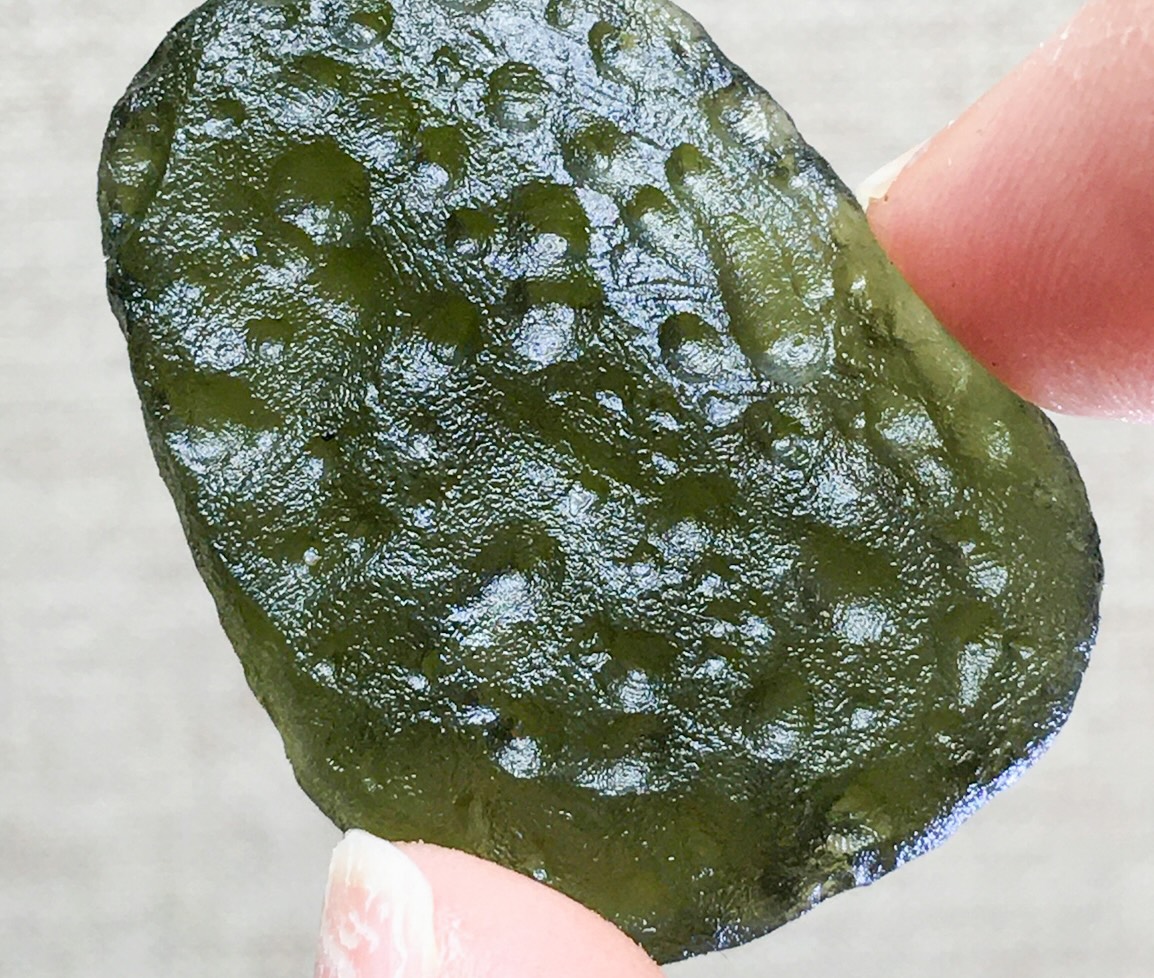
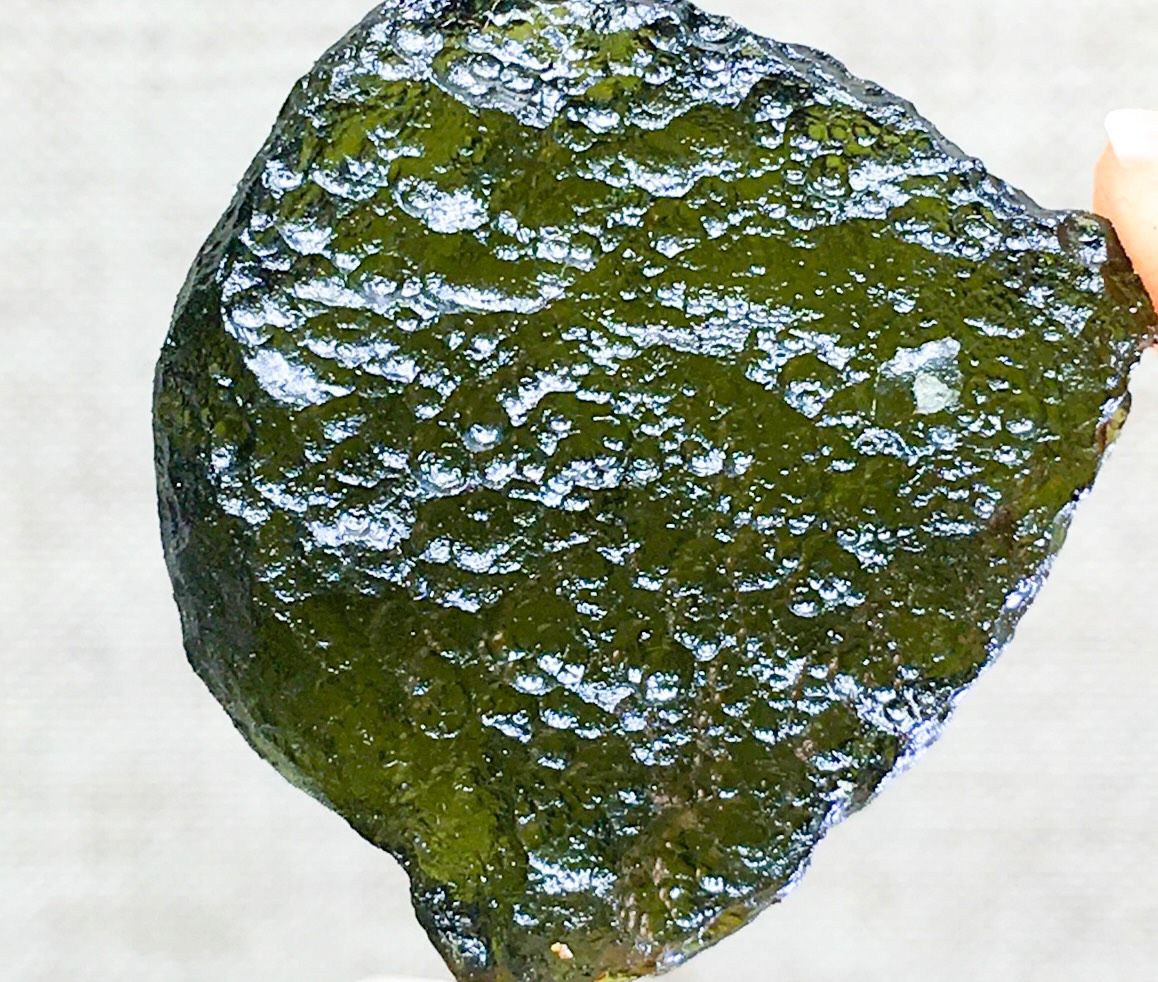
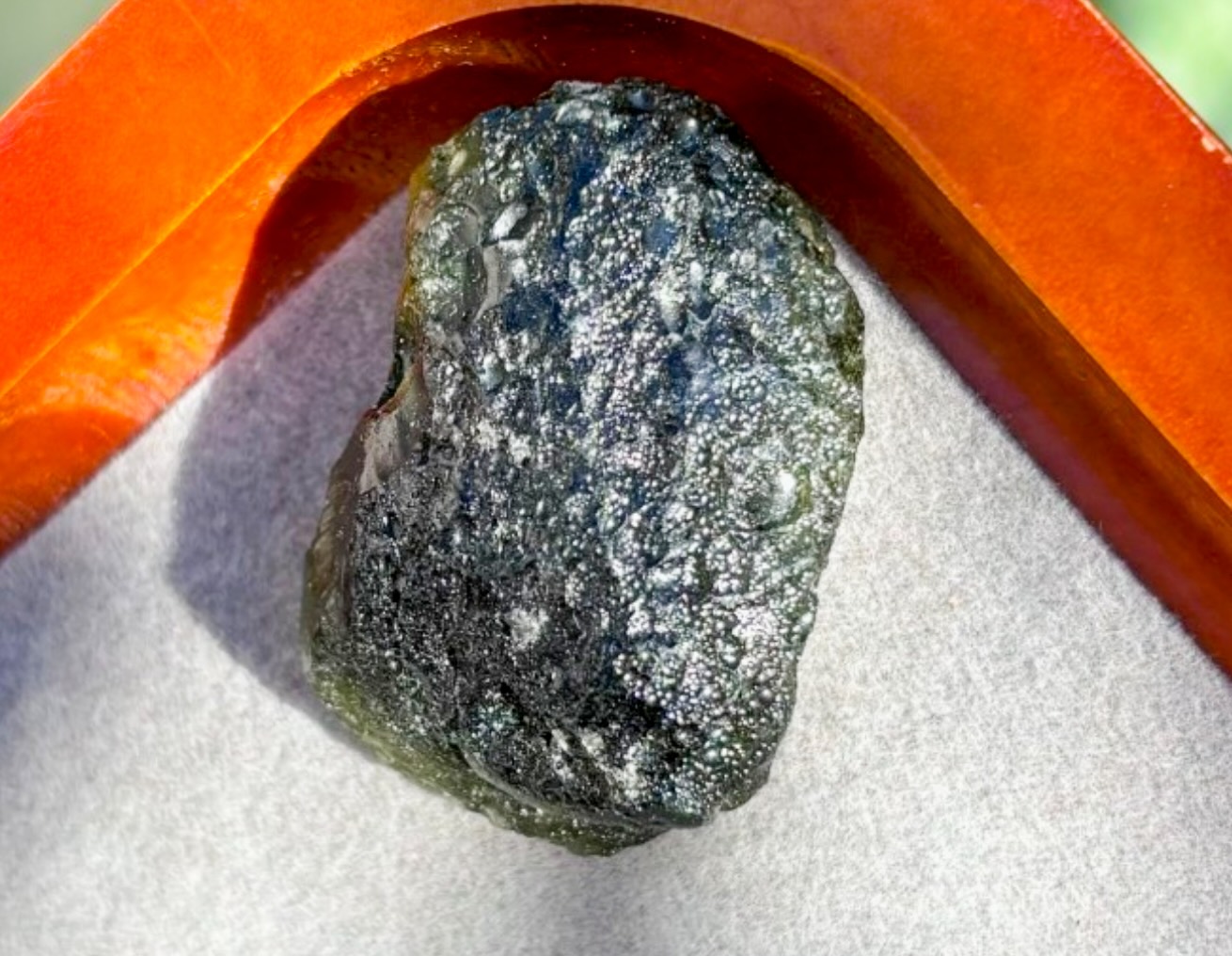
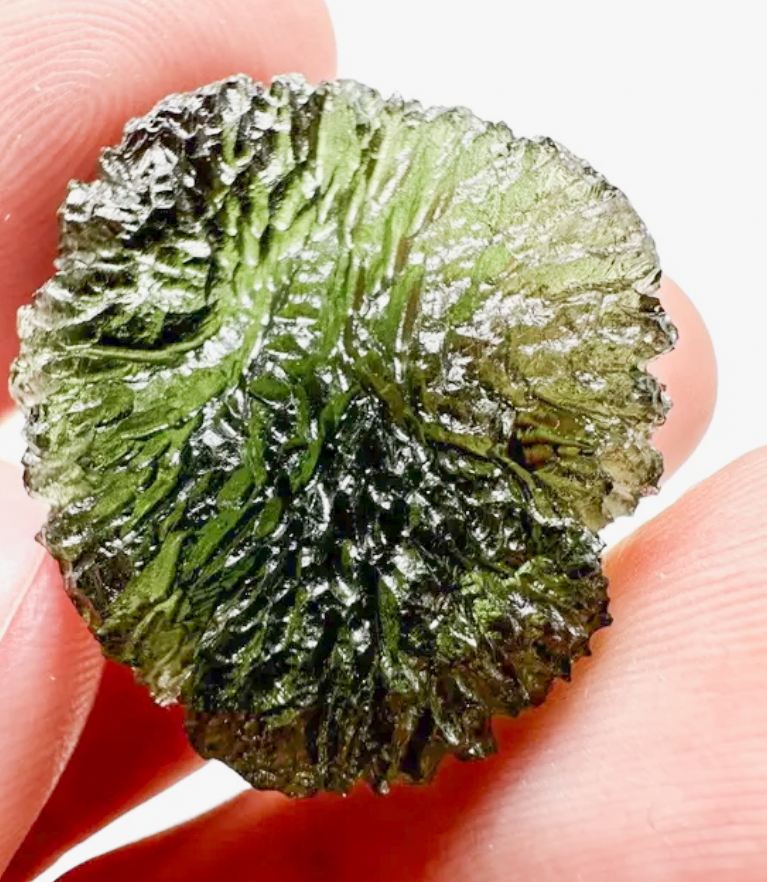
The natural sculpted surface of moldavite is called sculpture (or more simply, texture). It was formed by chemical corrosion of the moldavite material in sediments over millions of years. Several types of the texture can be distinguished, with varying degrees of preservation.
The surface of a moldavite is a good indicator of authenticity. It is almost impossible to replicate it perfectly.
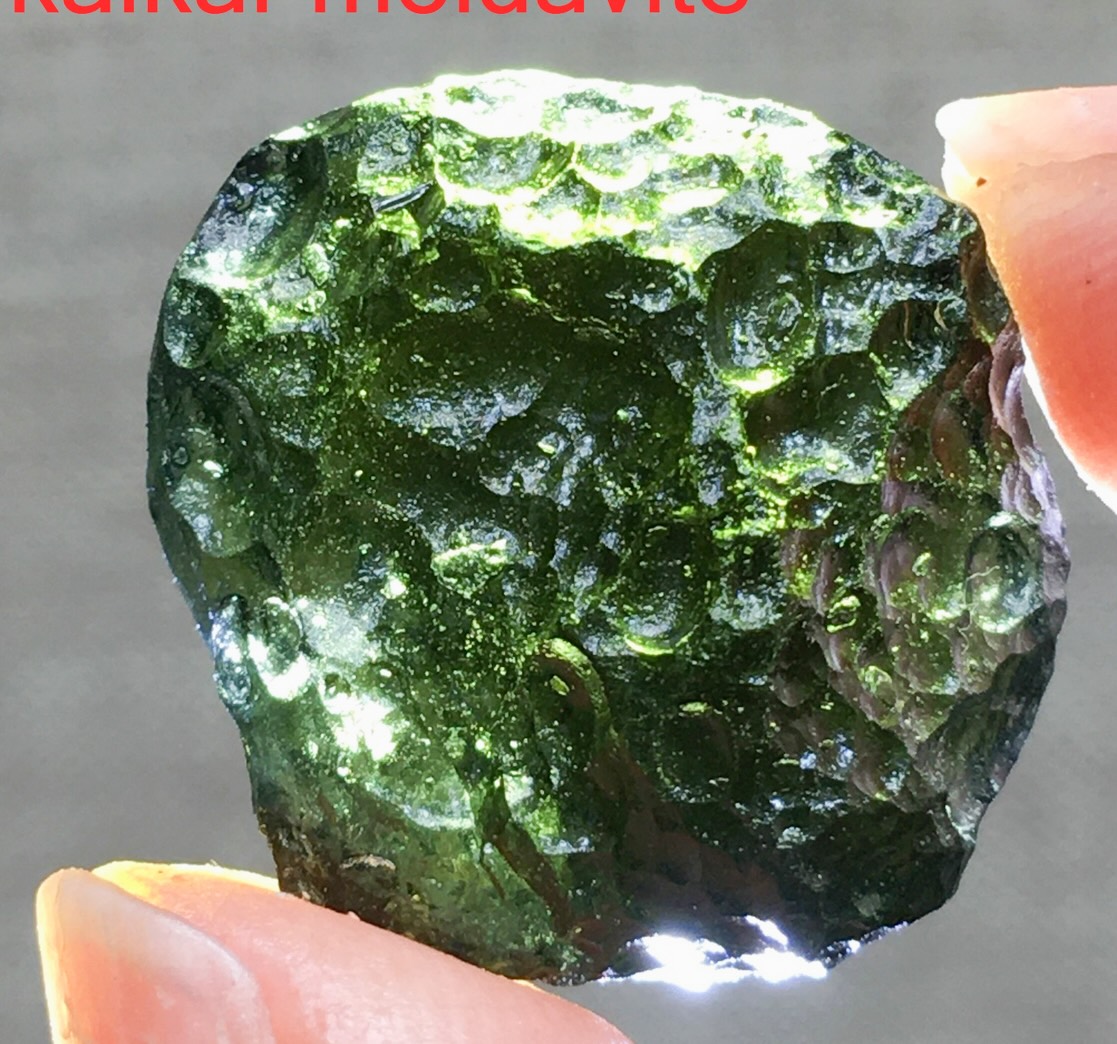
Texture of authentic moldavites
Real moldavite has a deeply etched surface. you can find pits, grooves, ridges, irregular patterns.
It often looks almost “melted but frozen in motion” – but in a chaotic, not regular way. They often form flowing patterns.
Real moldavites have multi-layered etching, not just surface-level texture. With a 10× loupe, you should see:
- tiny pits and micro-textures
- layered etching
- irregular depth (not uniform)
The surface should look complex and “alive”, not flat.




Texture of fake moldavites
Fake moldavites (especially the cheaper imitations) usually have a rather smooth surface – as if melted and polished. You won’t find fine, sharp details on them. Sometimes the surface looks uniform, and could find fake roughness (carved or sandblasted).







3. Surface luster of moldavites
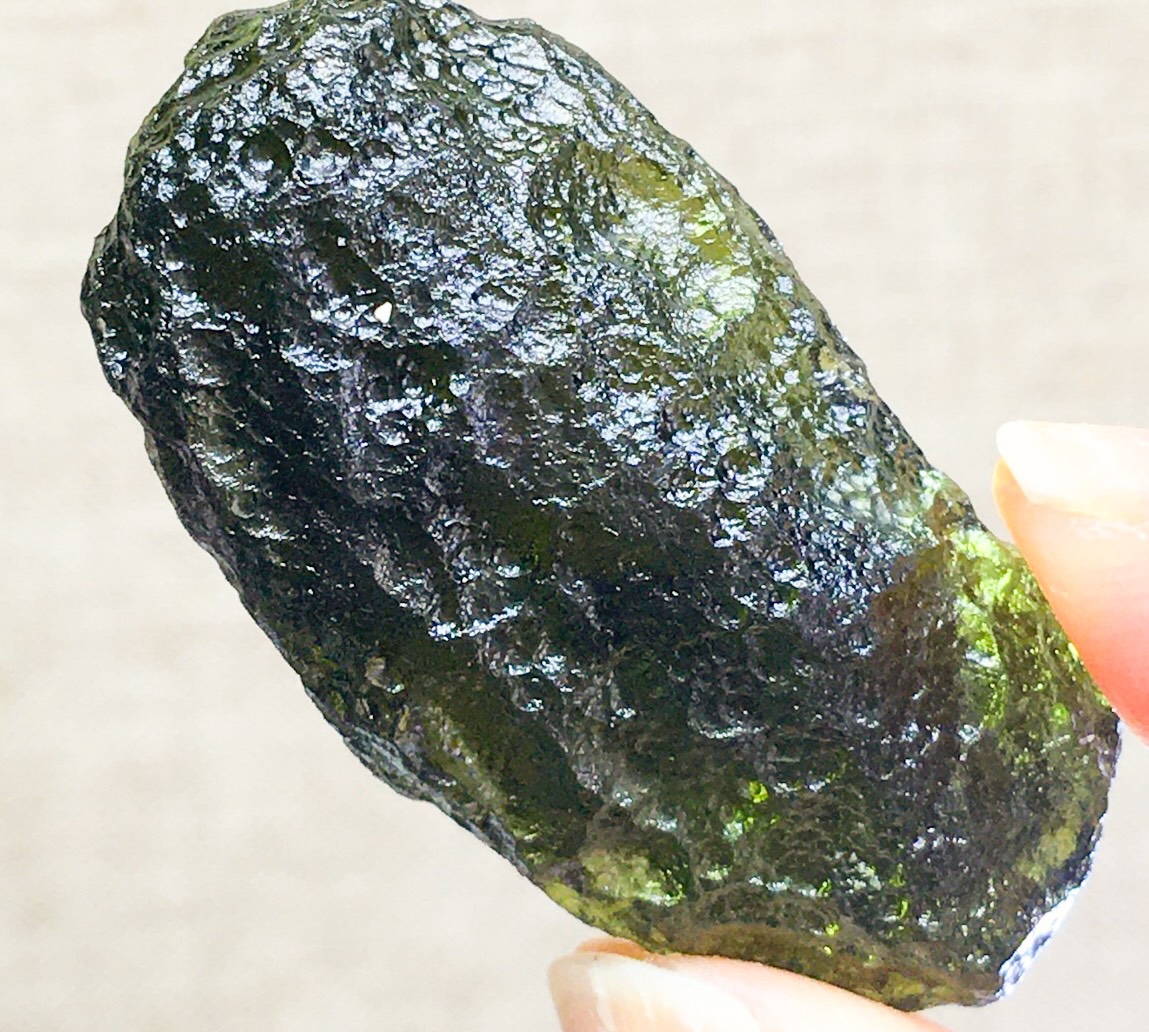
Moldavite surfaces vary widely in glossiness, spanning five basic degrees from completely matte to a rare, highly shiny glassy finish. The shiniest examples are exceptionally uncommon, found in roughly one in every thousand stones.
A very glossy surface is actually a red flag when it comes to moldavites – it is a telltale sign of cheap counterfeits, which tend to mimic the uniform shine of ordinary glass.
4. Other properties you can check on the surface of moldavites
- Minor damage – chipped spikes or even parts of the stone → likely a genuine moldavite. Imitations are usually perfect. Such damage typically occurs during mining.
- Open bubbles (on the surface) and channels → likely a genuine moldavite.
- Two types of texture (one part of the moldavite looks different from another) → likely a genuine moldavite (if the texture looks natural).
- Residues of clay trapped in surface cavities that were not removed during cleaning → genuine moldavite.
5. Internal structure
Natural raw moldavites are hard to inspect internally because their surface blocks visibility. Small or thin pieces can be examined using immersion liquid, but this doesn’t work for larger stones. Usually, only surface bubbles are visible, and these may be artificial. Glossy or damaged stones make internal inspection slightly easier.
6. Weight, size, price
- Real moldavite is expensive and getting rarer
- Large pieces (over 10g) are rare and costly
- Cheap listings = major warning
➡️ If it looks amazing AND cheap → it’s almost certainly fake

How to identify authentic moldavite from Besednice
“Hedgehogs”, a nickname for Besednice moldavites, are prized for their beauty. Their sharp, needle-like surface formed due to minimal sediment transport and is well preserved. The needles tend to be several millimetres long. Although there are several deposits near Besednice, true hedgehogs come only from the Ježkovna site. The deposit has already been exhausted, so no more Besednice moldavites will be found.
Because they are rare and valuable, Besednice moldavites are heavily faked.
It doesn’t always have to be a fake moldavite, but moldavites from other localities are often sold as Besednice moldavites.
When determining the authenticity of moldavites from Besednice, the same approach is used as for regular moldavites with a natural surface. However, moldavites from the Besednice locality have their own specific characteristics.
You can see some top Besednice moldavites here
1. Texture of Besednice Moldavites
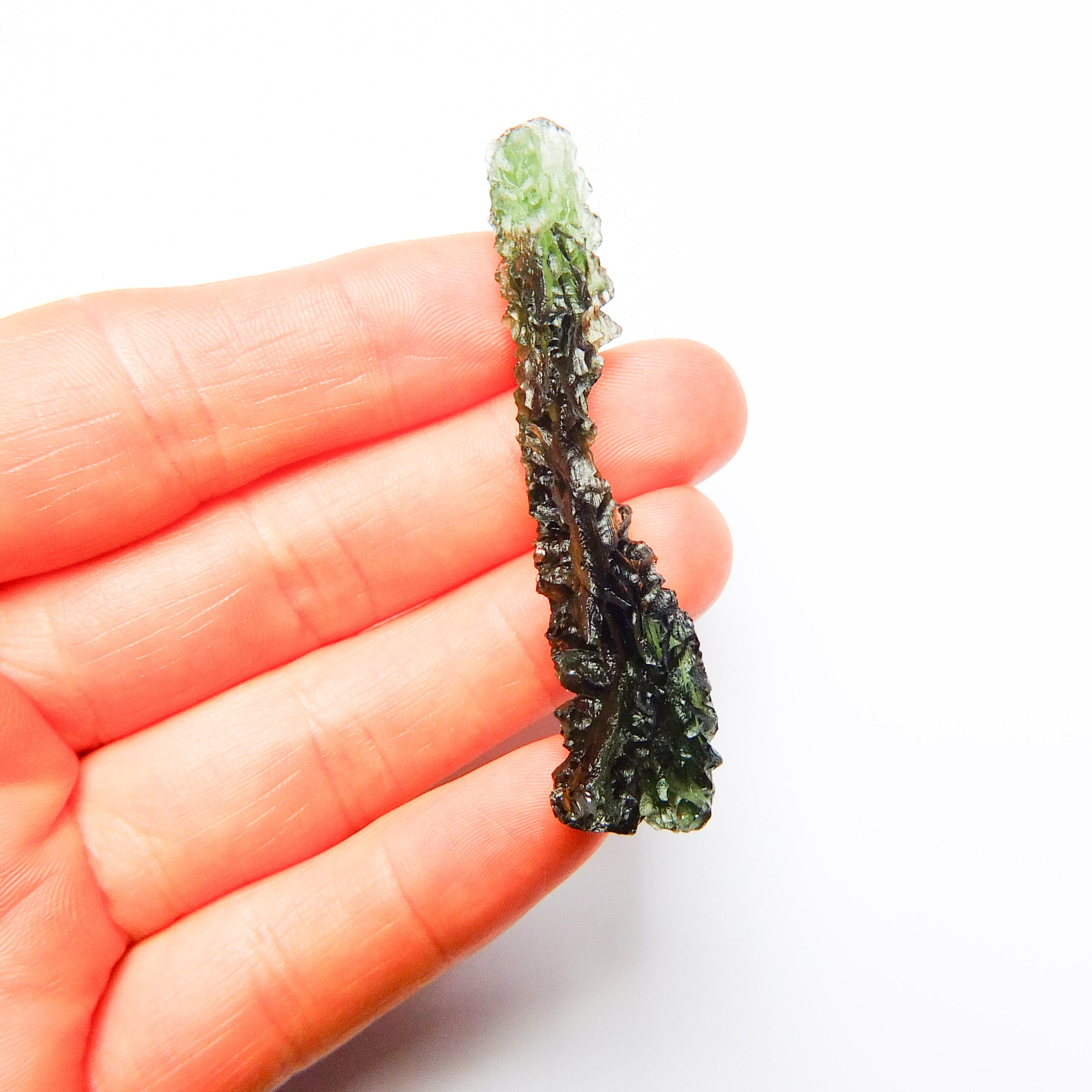
The key feature of these stones is their surface sculpture, which varies in sharpness and needle length depending on quality. Smaller stones (around 1 gram) have less spiky but still distinct textures. Larger Besednice stones feature sharp, unrounded needles about 2–7 mm long. In highly sculpted pieces, ridges on the underside may align in one direction, while flatter hedgehogs show ridges that appear carved into the stone when viewed from the side.
✔️ Real Besednice moldavites:
- Extremely random and chaotic micro-detail
- Texture has depth (not just surface carving)
- Highly detailed, intricate surfaces – become more complex the closer you look
- No repeating patterns
- Natural transitions between features
❌ Fake:
- Pattern looks too perfect or decorative
- Texture feels flat or shallow
- fall apart under magnification – no microtexture
- Repetition across the surface
- “Too good to be true” symmetry
- Artificially carved “lace” texture
- Acid-etched glass trying to mimic detail
Video showing the surface details of Besednice moldavite
A very detailed view of a top Besednice moldavite with long, sharp spikes – a true “hedgehog.” A sharp macro view of the texture and microtexture.
2. Surface luster and color
To verify a hedgehog moldavite, check its glossiness – the surface should be matte / slightly to moderately glossy with an even lustre throughout. Very glossy and very matte moldavites do not occur at Besednice deposit.
Color: olive green, moss green, sometimes a slightly lighter green. There are no pale green or brownish moldavites.
3. Locality / deposit
Dishonest sellers often pass off moldavites from other localities as moldavites from Besednice. They are not necessarily fake moldavites, but they are simply different ones. They are not the “hedgehogs” from Besednice. Always check their appearance and don’t rely solely on the seller.
4. Damage and chips
The hard bedrock at the Besednice site makes extraction difficult, and because moldavites are fragile, most hedgehogs have slight damage – especially on the tips of their spikes. A completely flawless piece should be treated with caution.
5. Size and price of Besednice moldavites
Besednice moldavites are:
- Rarer than standard moldavite
- Highly sought after by collectors
- Increasing in price due to limited supply
Fine “lace” or “hedgehog” pieces can be significantly more expensive per gram.
Similar to regular moldavites, the price per gram increases exponentially with weight. Besednice moldavites over 5 grams are already considered valuable. In general, Besednice moldavites are not very large or heavy. For example, moldavites weighing around 20 grams are extremely rare (they do exist, but are practically impossible to buy).
Photos of authentic Besednice Moldavites




Where to buy real Besednice Moldavites
When it comes to Besednice moldavite, authenticity and origin matter – and that’s exactly what we guarantee.
Check this eshop with real Besednice Moldavites directly from miner.
✔️ Guaranteed Authenticity
Every piece in our collection is 100% genuine moldavite, carefully verified so you can buy with complete confidence. Every Besednice moldavite is with a certificate of authenticity.
⛏️ Directly From the Source
We are and we work directly with original miners, not resellers or anonymous suppliers.
That means:
- no middlemen
- no uncertainty
- no compromises
🪨 Genuine Besednice Origin
All our moldavites come specifically from the Besednice deposit – one of the most sought-after and collectible sources in the world.
🕰️ Rare Old-Stock Material
Our pieces were sourced when mining was still actively taking place. Today, the deposit is no longer producing any moldavite.
You’re not just buying moldavite – you’re investing in a verified, traceable, and truly rare specimen with real history behind it.
👉 No guesswork. No fakes. Just authentic Besednice moldavite – exactly as it should be.

Gemological test of authenticity of moldavites
There are several gemological methods to verify authenticity of moldavites, varying in reliability and time required depending on the equipment. It’s best to use multiple methods, as individual tests can sometimes be misleading.
For more detailed info check this book ↗.
Immersion liquid
Available for inspecting the internal structure of the moldavite – no expensive equipment needed.
Immersion liquid is a fluid with the same refractive index as moldavite (around 1.5).
It helps us “see through the surface” and observe the internal structure of the moldavite.
Microscope
Binocular microscopes (stereomicroscopes) with relatively little magnification (10-70x) are used. Microscopes used in gemology enable you to inspect a moldavite in immersion liquid.
Using a microscope, we observe the microtexture of the moldavite and try to identify protruding lechatelierite. In combination with immersion liquid, we look for bubbles.
Measurement of an index of refraction (RI)
A normal measurement can be carried out only on cut / faceted moldavites. For raw moldavites only approximate value.
You can find exact values of RI in this book.
Relative density – specific gravity (SG)
Relative density (or specific gravity) compares a stone’s weight in air to the weight of an equal volume of water. While “relative density” is more common in modern science, gemology typically uses the term “specific gravity” (SG).
Specific gravity (SG) can also be measured at home. You can find instructions in the book.
However, some types of glass have similar values to moldavites, so this test alone is not a fully reliable indicator of authenticity. But not bad one.
Examination in polarized light
Not conclusive in authenticity determination.
Hardness determination
Destructive test 🙁
UV fluorescence
Could help. Natural moldavites are inert in UV light.
Magnetic property
Moldavites have a weak to moderate attraction to a magnet while man-made glass is inert.
Spectroscopy
Spectroscopy is the most reliable method for authenticity verification of moldavites but costly, as special equipment is needed.
These days Raman spectroscopy is used the most frequently. Spectrophotometry or X-ray spectroscopy could be used too.

Detailed information and instructions
Procedures, photos, and more information on how to identify genuine vs. fake moldavite can be found in the book “How to identify genuine moldavites and moldavite fakes”. It is available electronically on Amazon as well as in printed form.
It has even attracted the attention of GIA – see their review of this book.

FAQ: How to Identify Genuine vs Fake Moldavite
How can I tell if moldavite is real at first glance?
Start with the overall appearance:
Real moldavite → irregular shape, matte surface, natural texture
Fake moldavite → smooth, shiny, or too perfect
👉 If it looks like polished green glass, that’s a major red flag.
What color should real moldavite be?
Real moldavite typically has:
olive green
moss green
slightly brownish-green tones
🚩 Be careful with:
bright neon green
overly vibrant or artificial-looking colors
👉 Natural moldavite colors are always more muted and earthy.
What should the surface of real moldavite look like?
deeply etched and textured
irregular, with pits and grooves
matte - shiny finish
🚩 Fake surface:
smooth or very glossy
artificially carved or repetitive
👉 The surface should look chaotic and natural—not designed.
Can moldavite be completely smooth?
Only if it’s polished or tumbled.
Raw moldavite → always textured
Polished moldavite → smooth, but then you must check internal structure instead
How can I tell if moldavite beads are real?
Beads are commonly faked, so check carefully:
Real beads: slight irregularities, natural inclusions
Fake beads: identical shape, glossy finish, mass-produced look
👉 Perfect uniformity = 🚩 warning sign
How important is the surface texture?
Very important - especially for raw stones.
Real moldavite has millions of years of natural etching
Fake pieces usually only copy the surface superficially
👉 The deeper and more complex the texture, the better.
Does price help identify real moldavite?
Absolutely.
Real moldavite is not cheap
Large or high-quality pieces are expensive
🚩 If the deal looks too good to be true → it probably is
Where does real moldavite come from?
Only from the Czech Republic.
What is the most reliable way to verify moldavite?
Use a combination of:
- Surface texture
- Internal structure (loupe test)
- Color and transparency
- Seller reputation
👉 There is no single test—real identification is about the full picture
Can I trust certificates of authenticity?
Not always.
Certificates can be faked or meaningless
They only matter if issued by a trusted authority
👉 A reputable seller is often more important than a certificate.
Free Moldavite Authentication Service
Free expert verification of moldavite authenticity.
- Verify Your Own Moldavite from Photos—Upload photos, and an expert will determine whether it is genuine or fake moldavite.
- Verify Moldavite Before Purchasing—Enter the product’s online listing, and you’ll receive a response indicating whether it is authentic or fake moldavite.
Where to buy real authentic moldavite
Finding genuine moldavite is just as important as knowing how to identify it. Because of its rarity and popularity, the market is full of imitations – so choosing the right seller matters.
Buy from trusted sources
Always look for sellers who:
- specialize in moldavite or natural minerals
- provide real photos of each piece
- clearly state Czech origin
- check reviews
- ideally comes from the Czech Republic
Know where the moldavite comes from
Authentic moldavite comes only from the Czech Republic, including well-known locations like Besednice.
Avoid risky marketplaces
Be cautious with:
- mass marketplaces (e.g. random listings)
- unusually low prices
- identical-looking pieces
These are often signs of fake or mass-produced glass.
Buy directly from a trusted source
The safest option is to buy from a seller who works directly with miners and verified sources. This ensures:
- guaranteed authenticity
- traceable origin
- carefully selected quality
👉 Browse our collection of authentic moldavites and choose from carefully sourced moldavites with verified origin and detailed photos.
- Moldavites with certificate of authenticity
- Moldavite pendants and other jewelry
- Besednice Moldavites
- Wholesale